
A sticker sheet is multiple stickers printed on one piece of backing paper, kiss cut so each sticker lifts off individually while the sheet stays intact. You buy by the sheet, not by the sticker.
That one structural fact drives everything else — the cost per sticker, how the product is displayed, how it's gifted, and how it's designed. A sheet with 30 small stickers and a sheet with 6 large ones can carry the same production cost but serve completely different customers.
This guide covers sheet sizing, layout math, cut specifications, artwork requirements, and the ordering decisions that determine whether your sheets are profitable or merely printed.
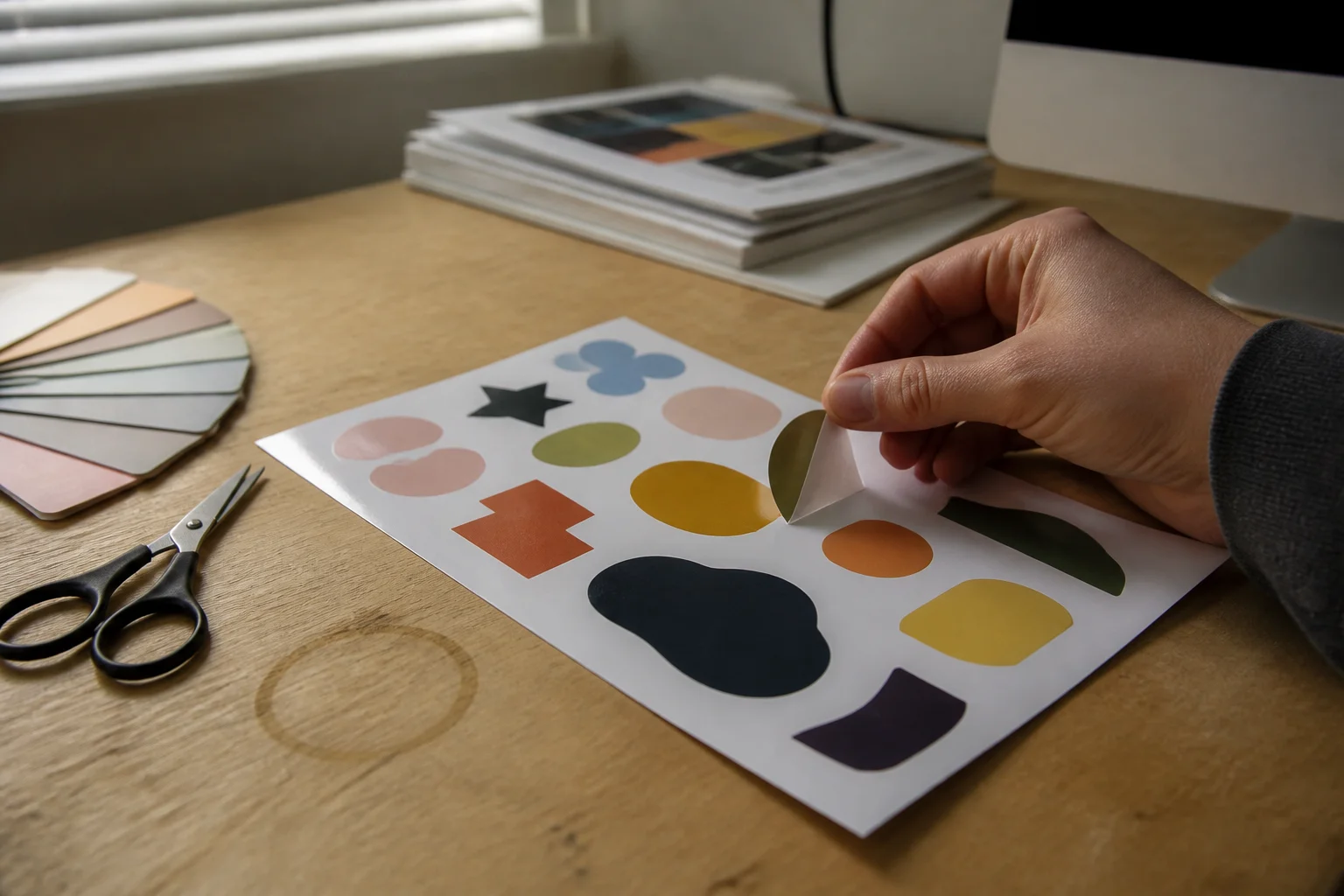
Sheets and individual die cut stickers aren't competitors. They serve different jobs, and the right answer depends on what the buyer is doing with them.
| Scenario | Best format | Why |
|---|---|---|
| Brand kit / logo distribution | Sticker sheet | Multiple sizes of one logo on a single sheet — one SKU, many uses |
| Retail packs for resale | Sheet, or sheet cut into packs | Higher perceived value per unit; easy to merchandise |
| Product packaging seal | Individual die cut | One sticker, one application, applied by hand or machine |
| Event giveaway | Sticker sheet | Feels like a gift rather than a single freebie |
| Planner / journal kits | Sticker sheet | The format is the product — users expect a sheet |
| Laptop / bottle decoration | Individual die cut | Buyers want one specific design, not a collection |
If you're still deciding between formats at the category level, start with Kiss Cut vs Die Cut vs Sticker Sheets → This article assumes you've chosen sheets and need to execute.
Not sure how many stickers fit your sheet? Send us your sticker dimensions and we'll return a layout with the exact count per sheet — before you commit to artwork. Get a free layout check →
Sheet dimensions are usually driven by the printing press and the shipping format, not by design preference. These are the sizes that keep costs low because they use standard stock efficiently:
| Sheet size | Dimensions | Typical use |
|---|---|---|
| US Letter | 8.5 × 11 in | Largest common sheet; retail packs, brand kits |
| A4 | 210 × 297 mm | European standard; same role as Letter |
| Half Letter | 5.5 × 8.5 in | Planner inserts, smaller retail packs |
| 5 × 7 in | 5 × 7 in | Gift and greeting-card adjacent products |
| 4 × 6 in | 4 × 6 in | Small giveaway sheets, insert cards |
| Custom | Any | Possible, but usually needs a custom die and a higher MOQ |
Two practical notes. First, custom sheet sizes almost always cost more per unit than a standard size at the same area, because the cutting die has to be made. Second, if you're shipping internationally, sheet size affects carton efficiency — a size that nests badly can quietly add freight cost per unit.
The count isn't a design choice; it's arithmetic. Work it out before you design, not after.
Worked example on a US Letter sheet with a 0.25 in margin and 0.125 in gutters:
| Sticker size (with gutter) | Approx. count on US Letter | Typical price positioning |
|---|---|---|
| 1 in | ~60–70 | Volume / giveaway sheet |
| 1.5 in | ~30–35 | Planner and journal sheets |
| 2 in | ~18–20 | The most common retail sheet |
| 3 in | ~8–9 | Premium / fewer, larger designs |
| 4 in | ~4–5 | Feature sticker sheet |
These are grid estimates. Irregular nesting can fit more, but only if the shapes allow it — don't plan your pricing around optimistic nesting.
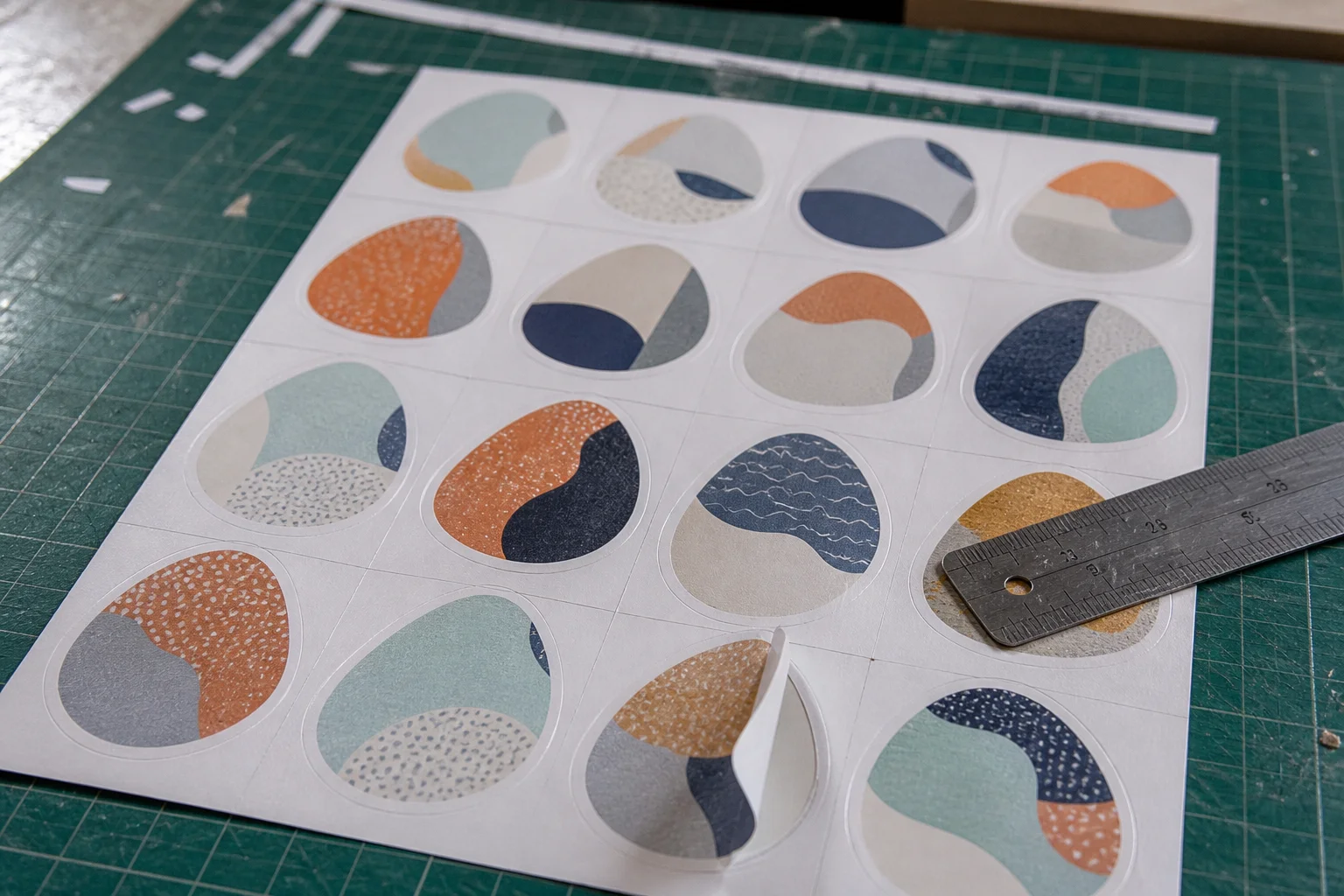
Sticker sheets are almost always kiss cut — the blade cuts through the vinyl and adhesive but stops at the backing paper, so the sheet stays whole while individual stickers peel off.
Three things to confirm on the spec sheet:
If you need stickers that come off entirely with no backing left behind, that's die cut, not a sheet.
Sheet artwork fails in predictable ways. These rules prevent the four most common ones:
Full preflight checklist: 10 rules for print-ready sticker files →
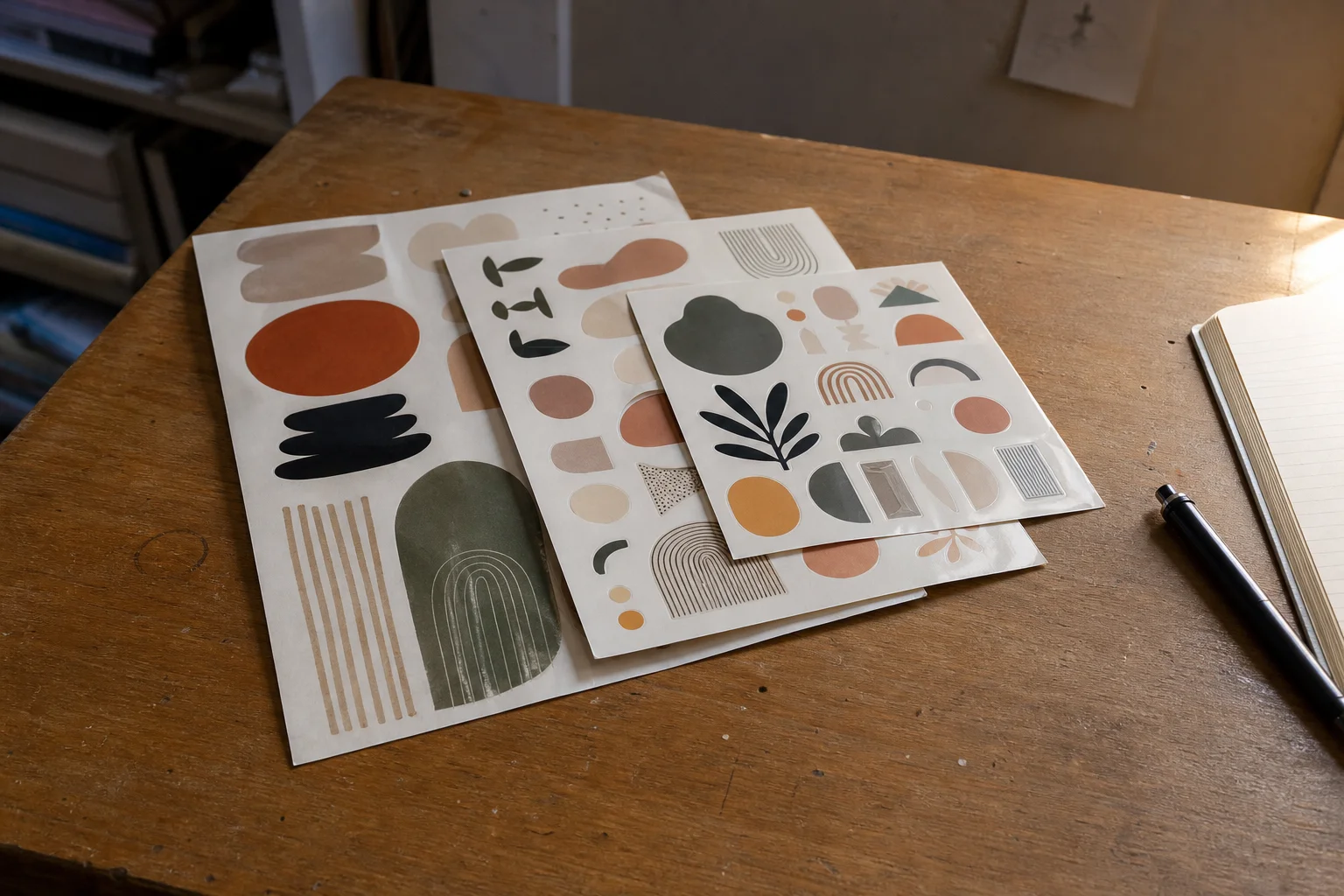
Need your artwork checked before printing? We review cut lines, bleed, margins, and resolution free of charge and send back a marked-up proof. Send your file for a free preflight →
Sheet stock follows the same logic as individual stickers, with one addition: because a sheet is handled more, laminate choice matters more than on a single sticker.
Material comparison across all options: Sticker materials compared →
Four variables set the per-sheet price. Knowing which one you're actually paying for lets you negotiate intelligently:
MOQ note: sheets are usually quoted per design, and a design means one sheet layout. Five different sheet layouts is five minimums. If you're testing concepts, test with one sheet design carrying mixed sticker sizes rather than five separate layouts. Related: MOQ structures explained →
Sheets have a distinct commercial profile from individual stickers. They sell best where the buyer wants a collection rather than a single item:
Retail margin math for sheet-based packs: Mini pack margins →
A sticker sheet is multiple stickers printed on a single piece of backing paper and kiss cut so each sticker can be peeled off individually while the sheet remains intact. Buyers purchase by the sheet rather than by the individual sticker.
It depends on sticker size. On a standard US Letter sheet with 0.25 in margins and 0.125 in gutters, you can fit roughly 60–70 one-inch stickers, 30–35 at 1.5 inches, 18–20 at 2 inches, 8–9 at 3 inches, or 4–5 at 4 inches.
Sticker sheets are almost always kiss cut — the blade cuts through the vinyl and adhesive but stops at the backing paper, keeping the sheet whole. If you need stickers that come off entirely with no backing remaining, that's die cut instead.
Standard sizes keep costs lowest because they use stock efficiently: US Letter (8.5 × 11 in), A4 (210 × 297 mm), half letter (5.5 × 8.5 in), 5 × 7 in, and 4 × 6 in. Custom sizes are possible but usually require a custom die and a higher minimum order quantity.
300 DPI at final print size, with vector art for anything containing hard edges. Never upscale a 72 DPI web asset — it will print visibly soft. Cut paths should be on a separate layer in a named spot colour, not drawn as visible strokes.
Keep all artwork at least 0.25 in from the sheet edge to allow for trim tolerance, and maintain at least 0.125 in of gutter between adjacent stickers so they can be peeled without tearing into a neighbour.
Not necessarily per sticker. Sheets reduce handling and packaging cost per unit, which is where the savings come from, but cut complexity and sticker count still drive cost. Always compare suppliers on a per-sticker basis rather than per sheet.
MOQ is usually counted per design, and one design means one sheet layout. Common minimums run 500–1,000 per layout depending on format and finish. To test multiple concepts without multiple minimums, start with one sheet design that mixes several sticker sizes.
Sheets reward planning. Calculate the count before you design, confirm the cut specification, keep your margins and gutters honest, and order one layout before you order five.
Jokeystickers has produced custom sticker sheets for 24 years for retail, subscription, and brand accounts. Free artwork preflight, free physical samples before production, and international certifications (ISO, FSC, UL, and more).
Free layout check · Free artwork preflight · Free physical samples
Send your sticker dimensions and target sheet size — we'll return the exact count per sheet and a per-sheet price.
Request a Sheet Quote →Explore related products:


