
Most custom sticker pricing feels like a black box — you email a supplier, wait for a quote, and hope the number comes in where you expected. But here's what experienced buyers know: with four simple inputs, you can estimate your cost accurately before you ever talk to a supplier. That puts you in control of the conversation instead of reacting to it.
Estimation matters for three reasons:
Here's the honest math behind custom sticker pricing — no hidden formula, no black box.
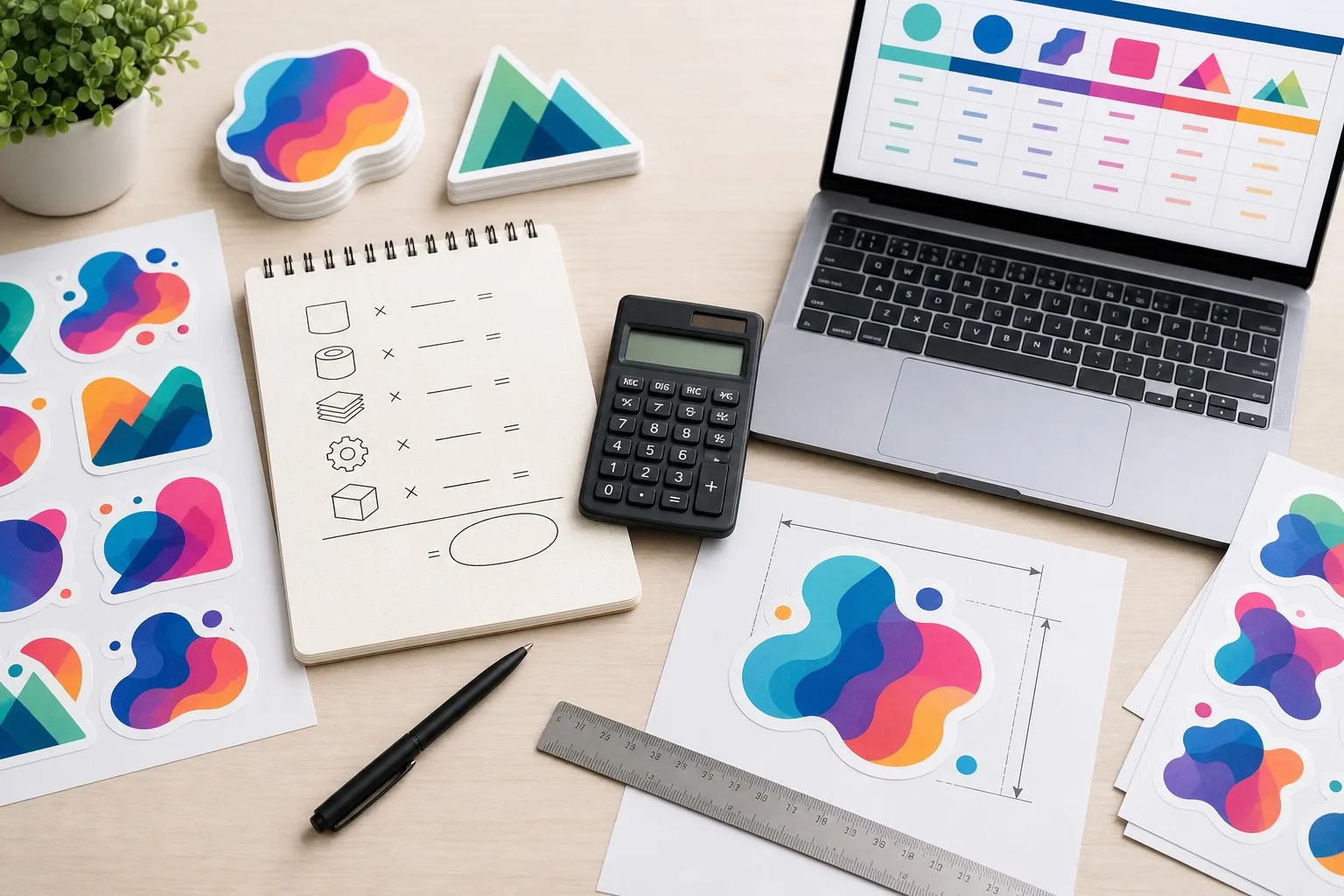
Quantity is the single biggest driver of per-unit price. Sticker production has fixed setup costs — artwork prep, plate/die setup, machine time — spread across every unit. Doubling quantity typically drops the per-unit price by 30–50%, not by half but dramatically. The sweet spot for most small businesses is between 500 and 5,000 units.
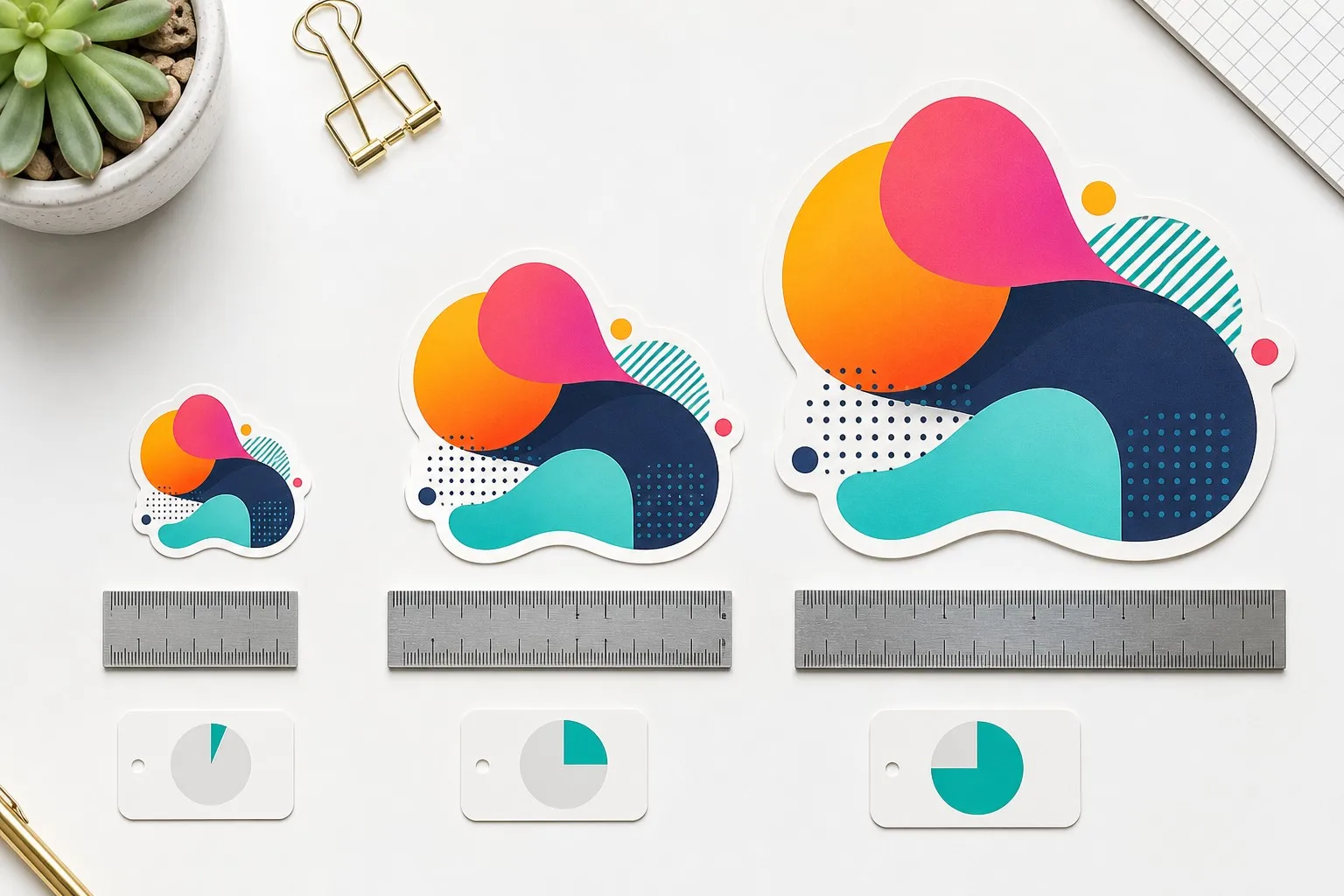
Price scales with material area, not linear dimension. A 3-inch sticker uses about four times the material of a 1.5-inch sticker — but because setup costs dominate small orders, the price difference is smaller than you'd think. At volume, however, size is where unit costs diverge fastest. Standard size options →
Material cost differences are meaningful but rarely shocking. Paper is the baseline; vinyl runs higher; specialty finishes — holographic, glitter, metallic — add a modest premium over standard vinyl. Lamination adds a small per-unit cost but dramatically extends durability. Material cost guide →
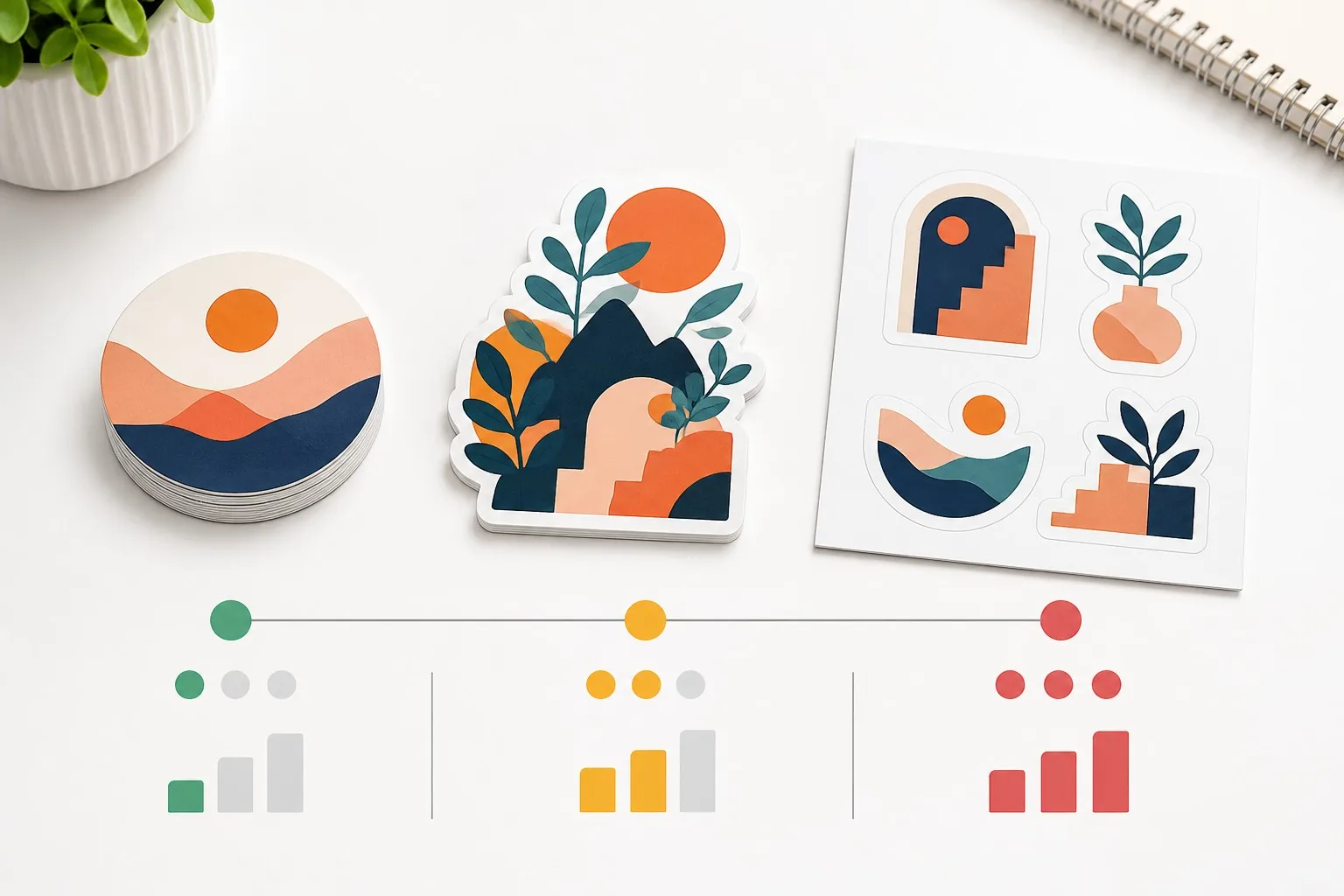
Simple cuts — circles, squares, rectangles — are the cheapest. Intricate die cut shapes cost a bit more in setup but rarely change unit price at volume. Kiss cut sheets and custom shapes follow the same logic. Kiss cut sheets →
Want a real number instead of an estimate? Send your artwork and quantity for a factory-direct quote — typically within 24 hours. Get your exact quote →
Here's a ballpark method you can use today. It's based on our factory's real pricing structure and is accurate enough for budgeting and supplier comparison:
This won't replace a quote — but it will tell you within a useful range what to expect, and it will catch outlier quotes instantly. If a supplier quotes 3x your estimate for the same spec, you know to ask questions.
Baseline (1,000 units): ~$0.25 each → quantity adjustment (2,000): ~$0.20 each → size 2-inch (baseline): no change → vinyl (baseline): no change → laminated: +10% ≈ $0.22 each. Estimated total: ~$440 plus shipping.
Different quantity or spec than the example? Get a precise quote for your exact size, material, and quantity — factory-direct, no middleman markup. Request a precise quote →
Beyond the per-unit price, watch for these five items — they're where surprise invoices come from:
Price breaks are real. If you need 800 stickers, check whether 1,000 costs barely more — the per-unit drop often makes the larger order the better value. Full pricing breakdown →
Multiple small designs on one kiss cut sheet share setup costs across all designs — often dramatically cheaper than ordering each design separately as die cut.
Sticking to standard sizes avoids custom die setup fees and lets you benefit from standard-material pricing.
Two brands ordering together reach higher quantity tiers — both save. It's common among small businesses and creatives with shared suppliers.
Print-on-demand platforms and resellers mark up 2–4x over factory pricing. A factory-direct order — same or better quality, no middleman — is the single biggest saving available. Why factory-direct →
Most suppliers start at 50–100 units; factory-direct minimums are often lower and pricing becomes efficient from around 500 units. Ask about your quantity →
At factory-direct pricing, roughly $200–350 for standard vinyl die cut stickers, plus shipping — before any setup fees. Use the estimating method above to refine for your spec.
Not linearly — a 4-inch sticker isn't 4x a 1-inch sticker. Setup costs are shared, but material area grows with the square of size, so large stickers do cost materially more at volume.
Margins are the main factor — resellers and print-on-demand platforms mark up 2–4x over factory pricing. Material, shipping, setup fees, and labor costs explain the rest.
At volume, minimal difference in unit price — the shape is cut from the same sheet. Custom dies may carry a small one-time setup fee on first orders.
For stickers that face moisture, friction, or UV — water bottles, outdoor use, products in transit — yes. Lamination typically adds 10–15% and multiplies lifespan several times. Waterproofing guide →
Buy factory-direct, order at a quantity tier that matches your real need, keep to standard sizes where possible, and combine designs on sheets. All covered in the five strategies above.
Delivered Duty Paid — the supplier handles shipping, import duties, and taxes, so the price you're quoted is the price you pay. Ask for DDP quotes to avoid surprise fees at delivery.
Estimation is a planning tool, not a substitute for a quote. Use the four drivers and the five adjustments above to budget your project, compare suppliers, and catch outliers — then get an exact factory-direct quote for your specific artwork, size, material, and quantity before committing.
Jokeystickers is a 24-year factory-direct manufacturer: free samples before production, international certifications (ISO, FSC, UL, and more), and DDP shipping options to the US and beyond.
Free samples · Transparent pricing · 24-hour quote · DDP options
Send your artwork, size, material, and quantity — we'll confirm (or correct) your estimate.
Request Your Free Quote →Cost-related guides:


