
A sticker is only as good as the material it's printed on. Choose well and your sticker survives rain, sun, and a year of handling while looking sharp. Choose wrong and you get faded colors, curling edges, and stickers that peel off in weeks — plus a reprint bill.
The four materials that cover 95% of custom sticker projects are vinyl, paper, BOPP, and polyester. Each has a job it's best at, and the "best sticker material" for your project depends entirely on where the sticker will live and how long it needs to last.
After 24 years of printing stickers and labels on our own factory floor, here's how we actually guide customers through this decision — no jargon, just what matters.
Jokeystickers fact: We stock vinyl, paper, BOPP, and polyester in-house and print every order ourselves. If you're not sure which material you need, send us your use case — we'll recommend the right one and can ship free material samples to confirm.
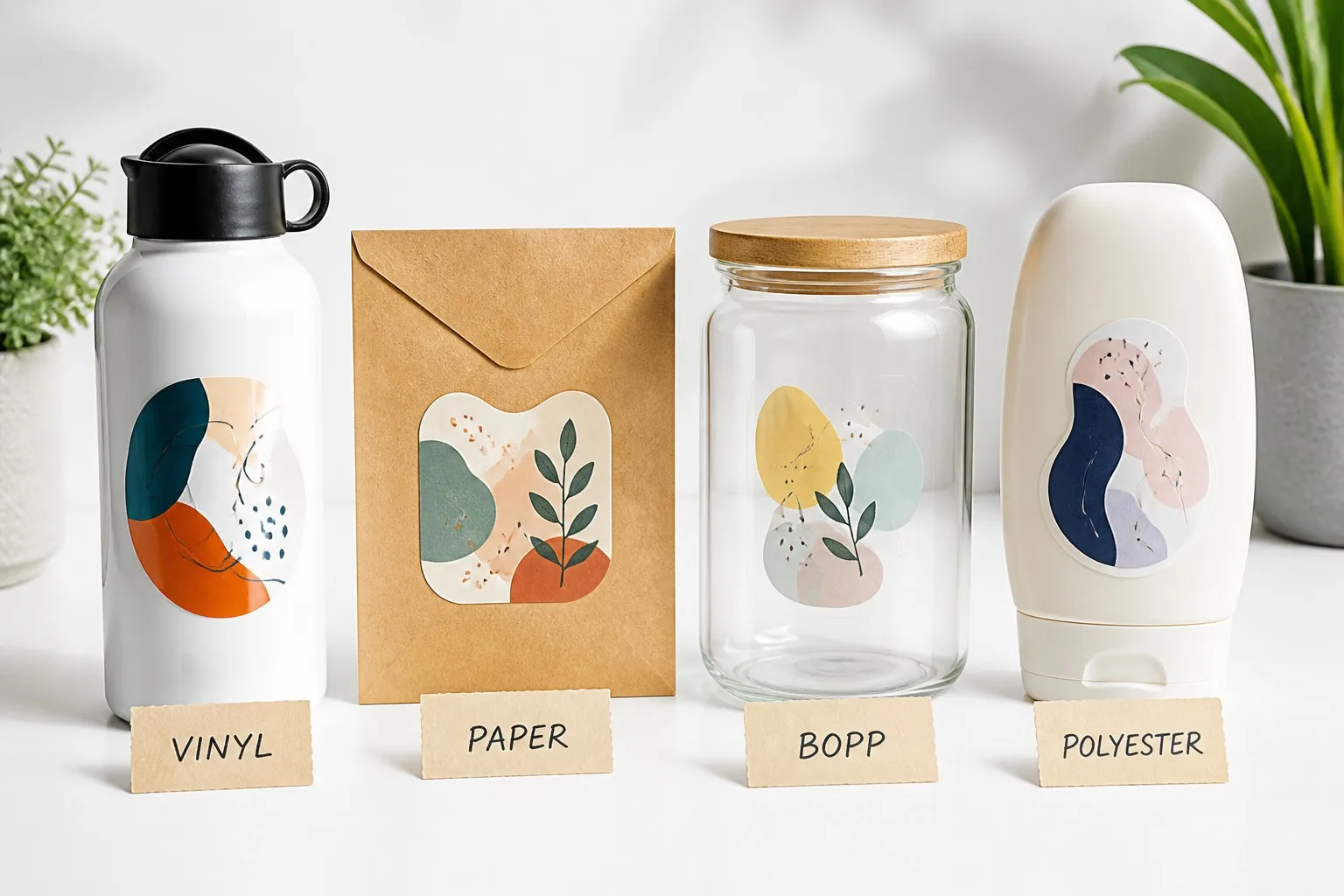
Vinyl is the most popular custom sticker material — and for good reason. It's a flexible, plastic-based film that handles water, sun, scratches, and temperature swings without breaking down.
Pros: Waterproof, UV-resistant (with lamination), flexible around curved surfaces, long lifespan, available in glossy and matte finishes.
Cons: More expensive than paper. Not biodegradable.
If your sticker will face moisture, sunlight, or rough handling — or if you want a premium, durable feel — vinyl is the answer. Add glossy or matte lamination and it shrugs off almost anything.
Related: Are Vinyl Stickers Waterproof and Weatherproof?
Paper stickers have a natural, matte texture that vinyl can't match. They're the go-to when cost matters most and the sticker's life is short.
Pros: Lowest cost, natural matte look, easy to write on, eco-friendly options available.
Cons: Not waterproof, tears easily, fades in sunlight, short lifespan (6–12 months indoors).
If the sticker lives indoors, has a short life, or budget is the deciding factor, paper does the job well. Just don't use it where moisture or sunlight is involved.
BOPP (biaxially oriented polypropylene) is a thin film material that sits between paper and vinyl. It's waterproof like vinyl but thinner, clearer, and often more affordable. If you've ever peeled a label off a beverage bottle, you've held BOPP.
Pros: Waterproof, oil-resistant, high clarity for transparent labels, thinner profile, food-safe options available, great value.
Cons: Less durable than vinyl outdoors, can feel "plasticky" on some products.
For product labels — especially food, beverage, or cosmetic packaging — BOPP is often the smartest choice. It delivers waterproof performance at a friendlier price than vinyl.
Related: What Is BOPP Label Material? Benefits, Uses, and Cost | Oil-Resistant vs Waterproof Labels
Polyester (PET) is the toughest material in this lineup. It's strong, dimensionally stable, and handles extreme temperatures, chemicals, and abrasion that would destroy vinyl or BOPP.
Pros: Extremely durable, heat and chemical resistant, tear-resistant, holds shape under stress.
Cons: Highest cost of the four, stiffer and less flexible, fewer finish options.
If your sticker must survive industrial conditions, extreme temperatures, or chemical exposure, polyester is the material that won't quit. It's overkill for everyday branding — but irreplaceable for the right job.
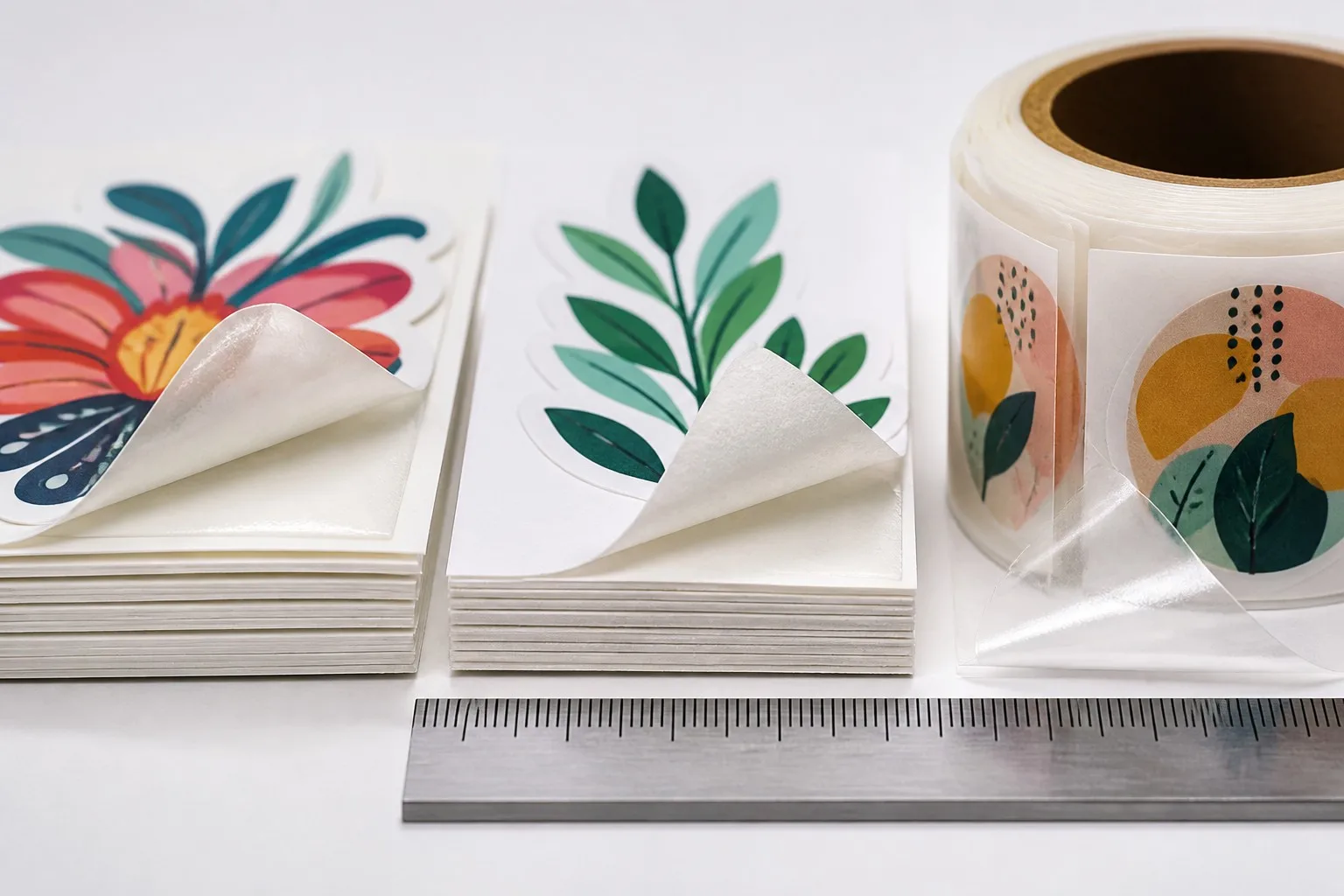
Here's the full picture at a glance:
| Material | Waterproof | Outdoor Life | Best For | Relative Cost |
|---|---|---|---|---|
| Vinyl | Yes | 3–5+ years | Stickers, decals, durable labels | $$ |
| Paper | No | Weeks–months | Tags, indoor packaging, promos | $ |
| BOPP | Yes | 1–3 years | Product labels, food/beverage | $$ |
| Polyester | Yes | 5+ years | Industrial, chemical, extreme conditions | $$$ |
Related: Best Sticker Material for Small Business Packaging — Full Guide
Still not sure which material fits? Tell us where the sticker will live and how long it needs to last — we'll recommend the right material and ship free samples so you can feel the difference. Request free material samples →
One factor that changes the material decision entirely: lamination. A protective coating (glossy or matte) applied over the printed sticker adds durability to almost any material.
Paper + lamination becomes water-resistant enough for many indoor-to-outdoor uses. Vinyl + lamination becomes nearly indestructible. If your budget is tight, lamination is often the highest-value upgrade you can add to a sticker order.
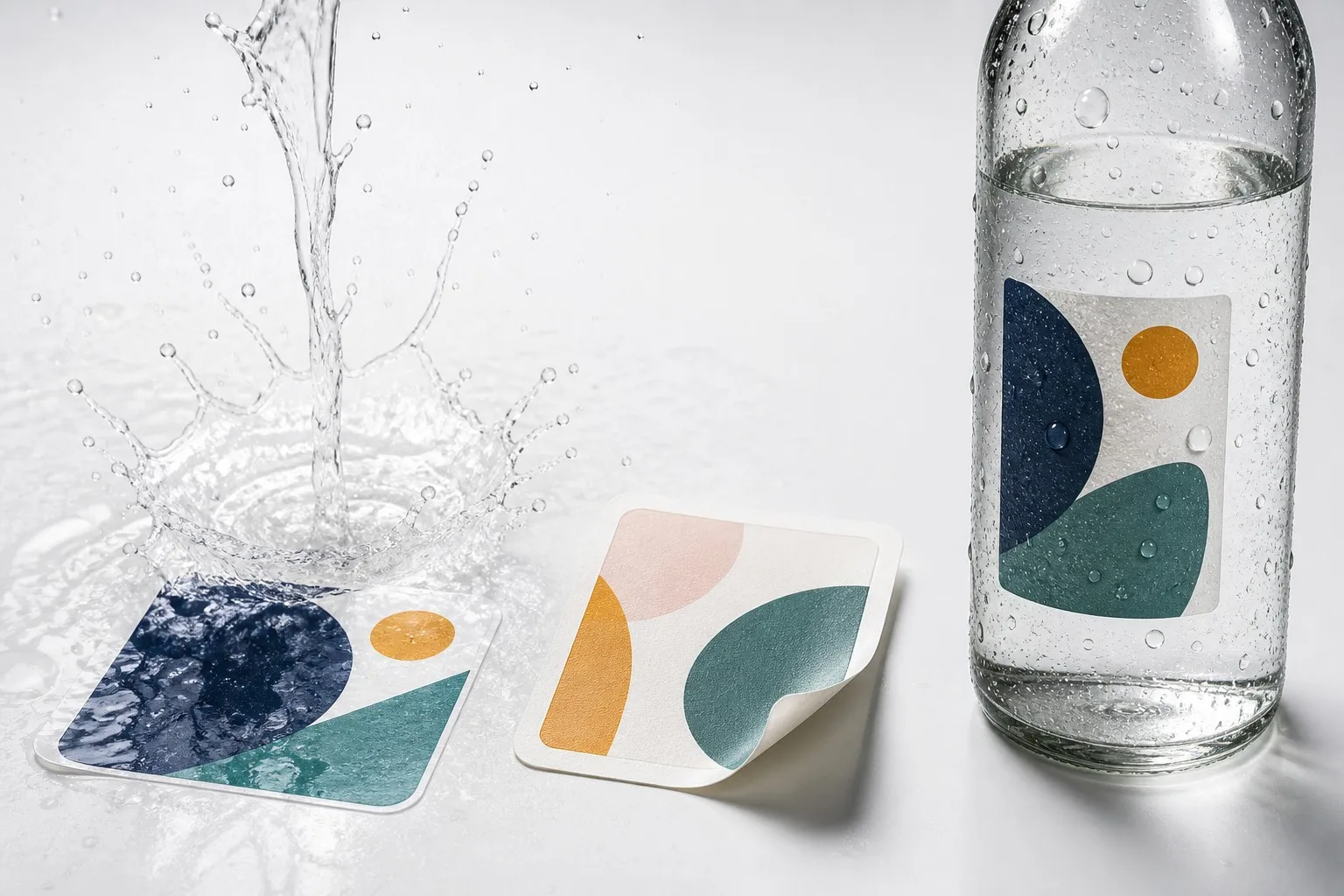
Material is one of the four pricing drivers for custom stickers (along with quantity, size, and cutting complexity). Here's the rough impact:
In bulk (1,000+), the per-sticker difference between materials often matters less than you'd think — sometimes pennies. Choosing the right material for durability usually pays for itself by avoiding reprints.
Related: How Much Do Custom Stickers Cost? Full Breakdown | How to Estimate Costs Before Ordering
Get a material-specific quote. Send your artwork, quantity, and use case — we'll price it on the right material with factory-direct pricing in under 24 hours. Get your quote →
For most branding and product uses, vinyl is the best all-round choice — waterproof, durable, and long-lasting outdoors. Paper is best for budget and short-term indoor use, BOPP for food and beverage labels, and polyester for industrial conditions.
Vinyl with UV-resistant lamination. It survives rain, sun, and temperature swings for 3–5+ years. Polyester is even tougher for extreme conditions, while paper and unlaminated materials degrade quickly outdoors.
Yes. Vinyl stickers are naturally water-resistant, and with lamination they shrug off rain, spills, and humidity for years. Learn more →
BOPP is a thinner, clearer film that's great for product labels — especially clear "no-label" looks and food packaging. Vinyl is thicker and more durable for outdoor or heavy-handling applications. Both are waterproof; BOPP is usually more affordable.
BOPP is the standard choice for food packaging — it's waterproof, oil-resistant, and food-safe. Paper works for dry goods with shorter shelf life. See our food label guide →
With lamination, paper stickers gain significant water resistance — enough for many indoor and short-term outdoor uses. But for true waterproof performance, vinyl or BOPP are the right choice.
Yes. We offer FSC-certified paper stock and recycled options. For brands with sustainability requirements, contact our team to discuss eco-friendly materials and coatings.
Material is one of four pricing drivers (with quantity, size, and cutting). Paper is cheapest; BOPP and vinyl cost modestly more; polyester is premium. Lamination adds a small per-sticker cost but dramatically extends lifespan.
Yes. We print free physical samples on your chosen material before production so you can compare feel, finish, and adhesion. Request your free sample kit →
Choosing the right sticker material is a small decision with a big impact — it determines how long your stickers last, how good they look, and whether you'll be reordering quality replacements or reprints of failures.
Jokeystickers has printed custom stickers and labels for 24 years. We're a factory, not a middleman: factory-direct pricing, free samples before production, and eight international certifications (ISO, FSC, UL, REACH, and more). We stock all four materials in-house and print every order ourselves.
Free samples · Factory-direct pricing · 24-hour turnaround
Tell us your use case — we'll recommend the material and price it.
Request Your Free Quote →Explore materials by product:


