

Choosing the right sticker material for packaging is more important than most small businesses realize.
For many brands, a sticker is not just a label. It represents product quality, brand positioning, and customer experience. A poorly chosen sticker material can peel in cold storage, fade during shipping, or look cheap on premium packaging.
According to packaging industry reports from Statista and Market Research data, over 70% of consumers say packaging influences their perception of brand value. That includes your sticker material for packaging.
This article will help you:
If you’re sourcing sticker material for packaging, this guide will help you make a confident purchasing decision.

Why Choosing the Wrong Sticker Material Can Hurt Your Packaging
Many small brands focus on design but ignore sticker material performance.
Here are real scenarios:
1️⃣ Food Brands Using Standard Paper Stickers
A bakery uses paper sticker labels on refrigerated dessert boxes. After 24 hours in cold storage, moisture causes edges to curl.
Result?
Customers see a low-quality presentation.
2️⃣ Cosmetic Bottles and Water Exposure
A skincare brand selects non-waterproof sticker material for packaging. Condensation in bathrooms causes bubbling and ink smearing.
Brand perception drops instantly.
3️⃣ E-commerce Shipping Friction
Online sellers often underestimate shipping friction. During transportation, boxes rub against each other. Without lamination, the sticker surface scratches easily.
4️⃣ Cheap Adhesive = Poor Hold
Some startups choose low-cost adhesive sticker options. The label detaches during transit.
That small saving damages brand trust.
Core Insight
A sticker is not just identification. It is part of the packaging experience.
If your product costs $30, but your sticker looks like $0.02, customers notice.
👉 Explore Material Options before committing to bulk orders.
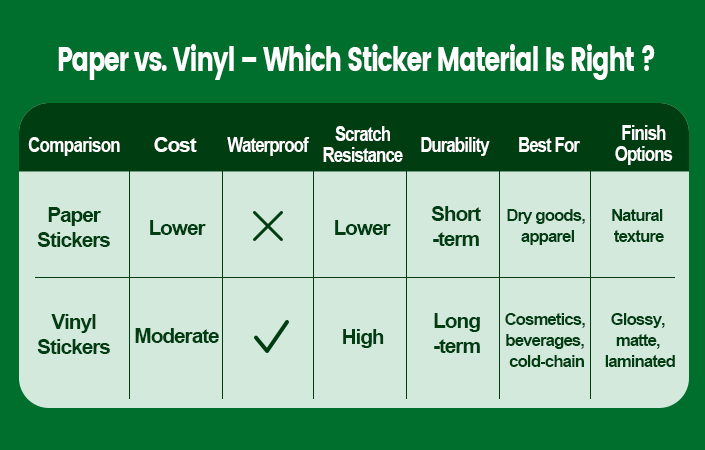
Paper vs. Vinyl – Which Sticker Material Is Right for Your Packaging Needs?
When discussing the best sticker material, the most common comparison is:
|
Comparison |
Paper Stickers |
Vinyl Stickers |
|
Cost |
Lower |
Moderate |
|
Waterproof |
No |
Yes |
|
Scratch Resistance |
Low |
High |
|
Durability |
Short-term |
Long-term |
|
Best For |
Dry goods, apparel |
Cosmetics, beverages, cold-chain |
|
Finish Options |
Natural texture |
Glossy, matte, laminated |
When Paper Sticker Material Makes Sense
Paper sticker material for packaging works well for:
If moisture is not involved, paper can be cost-efficient.
When Vinyl Is the Best Sticker Material
Vinyl is ideal for:
Many businesses assume paper is enough for packaging. But if your product involves humidity, refrigeration, or oil exposure, vinyl + lamination is often the safer choice.
👉 Learn More about vinyl sticker material options.
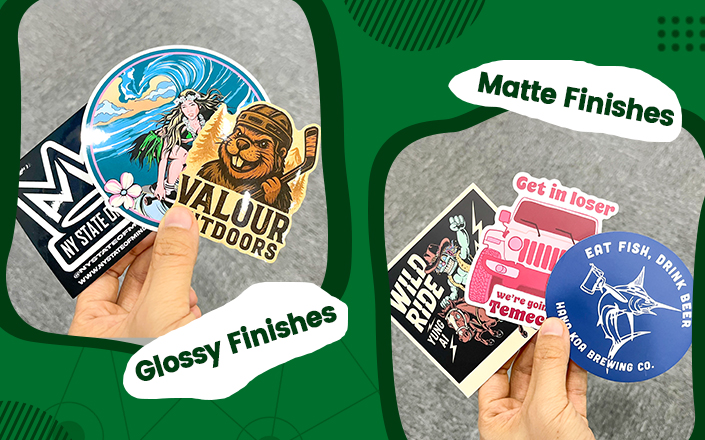
Understanding Finishes, Adhesives, and Durability Factors
Choosing the best sticker material is not only about paper vs vinyl.
It’s about performance layers.
Matte vs Glossy Finish
Matte Finish
Glossy Finish
Why Lamination Matters
Lamination adds:
Without lamination, even vinyl sticker material for packaging may fade faster.
Adhesive Types
Permanent Adhesive
Removable Adhesive
Waterproof vs Water-Resistant
Water-resistant: handles light splashes
Waterproof: survives full moisture exposure
For cold-chain products, waterproof is essential.
BOPP vs Standard Vinyl
BOPP:
Standard Vinyl:
Industry example:
👉 See How We Control Quality

How to Choose the Best Sticker Material for Your Budget and Order Volume
The best sticker material is not always the most expensive one.
It must match your stage of business.
Stage 1: Testing Phase (Small Batch)
Stage 2: Growing Brand Phase
Stage 3: Bulk Production Optimization
To reduce cost per sticker:
3 Things to Confirm Before Ordering
Many buyers only compare unit price.
But total cost includes:
According to Forbes packaging insights, brand consistency increases repeat purchases significantly.
👉 Request Free Samples before bulk production.
FAQ Section
Vinyl with waterproof lamination is usually the best sticker material for cold environments. It prevents curling and moisture damage.
Yes, if the product is dry and stored at room temperature. For refrigerated food, vinyl sticker material is safer.
Indoor use: 3–5 years. Outdoor: 1–3 years depending on UV exposure.
Permanent adhesive ensures the sticker remains attached during transit.
If friction or moisture is involved, lamination significantly improves durability.
Conclusion
The best sticker material for small business packaging depends on:
Paper sticker material works for dry, short-term packaging.
Vinyl sticker material offers durability and waterproof protection.
Your packaging is your silent salesperson.
Before placing your next bulk order:
👉 Talk to Our Expert
Making the right sticker material decision today protects your brand tomorrow.


