
In everyday conversation, people use "sticker" and "label" to mean the same thing. In practice — especially in a business context — they're different products built for different jobs, with different materials, adhesives, formats, and compliance expectations.
Getting it wrong costs money. Order labels when you need stickers and you'll get a product too thin for application by hand. Order stickers when you need product labels and you may end up non-compliant with category regulations, or with a product that peels in the fridge.
This guide clears up the difference once and for all — and gives you a simple framework to choose the right product for any application.
Jokeystickers fact: After 24 years manufacturing both, the most common ordering confusion we see is businesses labeling products with vinyl stickers (great durability, wrong adhesive for automated application) or decorating packaging with paper labels (wrong material for outdoor or moisture exposure). The right distinction saves reprints.
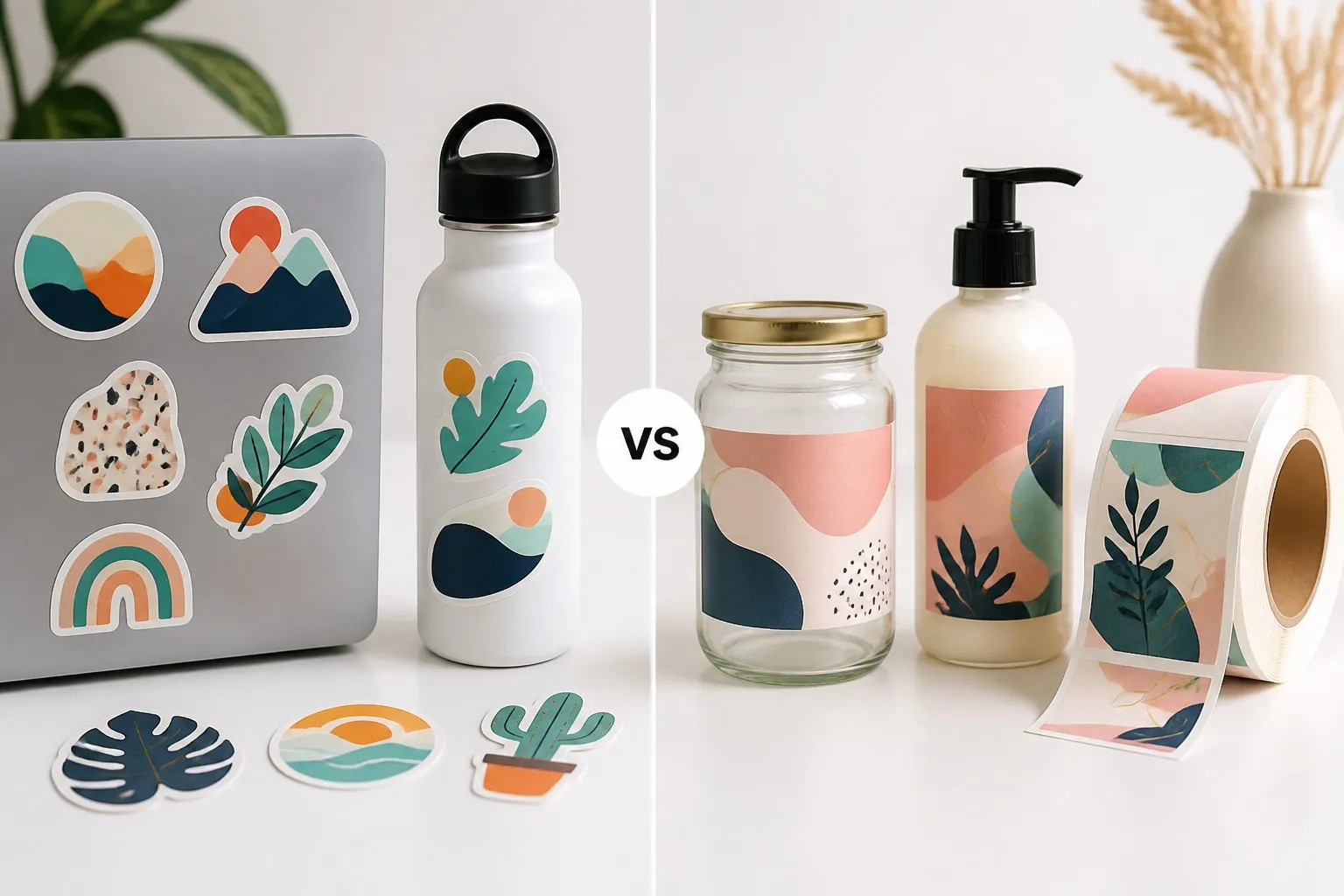
Stickers are for decoration, promotion, and self-expression — applied by hand to surfaces like laptops, bottles, cars, and packages. Labels are for product identification, information delivery, and compliance — applied to products, often by machine, with adhesives and materials engineered for the product's environment.
Both are printed adhesive products on a backing. The differences are in purpose, material, adhesive, format, and regulatory context.
| Factor | Stickers | Labels |
|---|---|---|
| Primary purpose | Decoration, branding, promotion | Product ID, information, compliance |
| Applied by | Hand (consumers, brand teams) | Machine (roll-to-roll) or hand (small batch) |
| Typical format | Die cut shapes, sheets, kiss cut | Rolls, sheet labels, die cut rounds/ovals |
| Common materials | Vinyl, holographic, paper, glitter | BOPP, polyester, paper, clear film |
| Adhesive | Varied — permanent, removable, repositionable | Food-safe, chemical-matched, permanent |
| Compliance requirements | Minimal — decoration only | Often required (food, cosmetics, pharma) |
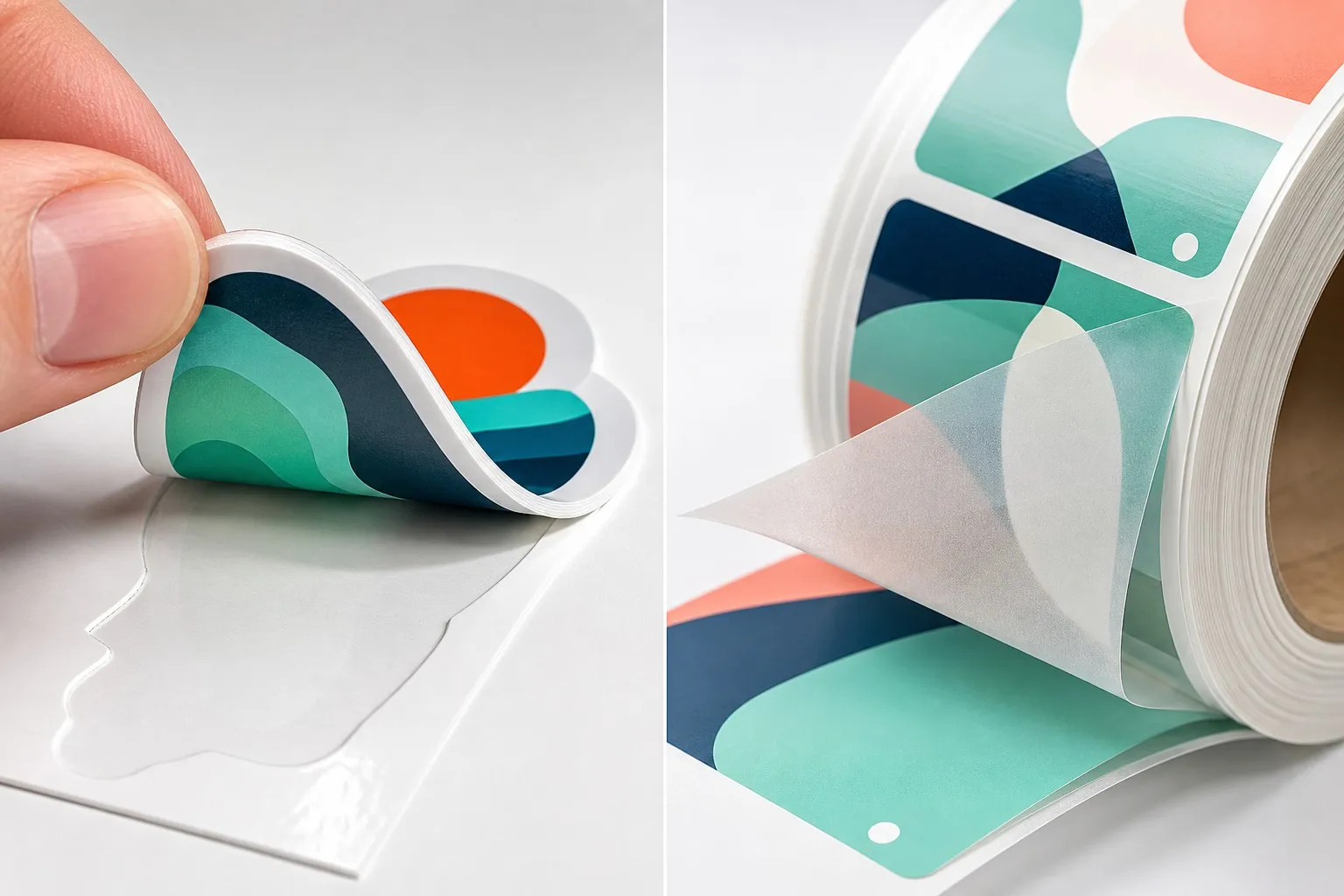
| Typical thickness | Thicker — designed for hand peeling | Thinner — designed for machine dispensing |
| Price point | Higher per unit (specialty materials) | Lower per unit at volume (thin film) |
Not sure which you need? Tell us what you're trying to do — product labeling, package decoration, merch, or something else — and we'll spec the right product. Get a recommendation →
Stickers are the right product when decoration, promotion, or branding is the goal — and hand application is how they'll be used.
A die cut sticker sealing a mailer box, a round seal sticker closing a jar lid, or a branded sticker adorning a shipping bag — these are sticker applications. The goal is visual impact and brand presence, not ingredient disclosure.
Brand stickers, event stickers, and merch pack inserts are pure sticker territory. Kiss cut sticker sheets are ideal here — multiple designs on one backing, easy to peel and hand out.
Customers applying your brand's stickers to their own property — laptops, water bottles, helmets, skateboards. Vinyl stickers are the right spec: thick, durable, waterproof, and built to be handled. Vinyl stickers →
A branded sticker sheet inside a package is a gift to the customer — something they'll keep and apply, extending your brand's reach beyond the purchase. Sticker sheets →
Labels are the right product when the adhesive must be engineered for a specific surface, the format must work with application machines, or the content must meet regulatory requirements.
Any product sold in retail — food, beverage, cosmetics, supplements — needs a label. Labels carry the required information (ingredients, net weight, manufacturer details), must use food-safe adhesives where applicable, and often need roll format for machine application. Custom labels →
Bottle labels and jar labels face condensation, oils, and refrigeration. BOPP film with the right adhesive is engineered for these conditions — a standard vinyl sticker may not adhere properly to a curved glass surface or survive fridge temperatures long-term.
Regulated product categories require specific disclosures. Labels — not decorative stickers — are the right vehicle because they use materials and adhesives vetted for direct contact, moisture, and regulatory compliance. Our ISO and FSC certifications cover the production standards these categories require.
If you're applying labels at speed on a production line, you need roll labels — thin, precisely wound, with adhesive release engineered for dispensing speed. Labels on roll →

Ready to order? Tell us your product, quantity, and how it will be applied — we'll quote the right spec and material at factory-direct pricing. Get your quote →
Many businesses use both stickers and labels — often on the same product or same order. Understanding the distinction helps you order each correctly.
In each case, a single manufacturer can supply both — which simplifies your supply chain and ensures design consistency. Why factory-direct matters →
Purpose and engineering. Stickers are for decoration and promotion — thicker, designed for hand application, any material. Labels are for product identification and compliance — often thinner, engineered for specific surfaces and sometimes machine application, with regulated adhesives for food/cosmetic contact.
Sometimes — but you need to verify material, adhesive, and compliance for your category. A vinyl sticker may work as a packaging decoration, but it's not engineered for food-safe adhesive contact or machine dispensing. For regulated products, use purpose-made labels.
Labels in roll format for machine application tend to be cheaper per unit at volume (thin material, efficient production). Custom stickers in specialty materials (vinyl, holographic) cost more per unit. Full pricing guide →
No — labels can be sheet-format for hand application or die cut for individual use. Roll format is required for machine application at volume. Roll labels →
BOPP (waterproof, oil-resistant — standard for food and cosmetics), polyester (industrial and chemical resistance), and paper (dry indoor products). Material guide →
Yes — and it's usually more efficient to order both from one supplier. Consistent color management, one point of contact, and potentially combined shipping. We manufacture both at our factory.
Seal stickers are decorative closures applied to jars, boxes, and pouches — primarily for visual impact and basic tamper-evidence. Seal labels are compliance labels applied to sealed products in regulated categories. Both are valid products; the distinction is purpose and regulatory context. Seal labels →
Yes — holographic film can be used for both decorative stickers and premium product labels. The manufacturing process is the same; the difference is adhesive type and application format. Holographic stickers →
Stickers and labels are both adhesive printed products — but they're engineered for different jobs. Use stickers for decoration, promotion, and brand building. Use labels for product identification, regulatory compliance, and machine application. Use both, strategically, for brands that want every touchpoint covered.
Jokeystickers manufactures both — custom stickers and product labels — from the same factory, with 24 years of experience and international certifications. Factory-direct pricing, free samples before production, direct communication with your production team.
Free samples · Factory-direct pricing · 24-hour quote
Tell us what you need — sticker, label, or a combined order.
Request Your Free Quote →Browse by product:


