
A sticker pack that flies out of a boutique display can sit untouched in a bookstore for six months — same stickers, same quality, same price. The difference isn't the product. It's the customer.
Bookstores, gift shops, and boutiques each draw a different shopper, with a different reason to buy and a different price tolerance. Stocking all three the same way means you're over-serving one channel and under-serving the others.
This guide breaks down what each store type actually needs — the themes that fit, the price tiers that work, and where to place the display for each.
| Channel | Primary shopper | Theme fit | Price tier | Best pack format |
|---|---|---|---|---|
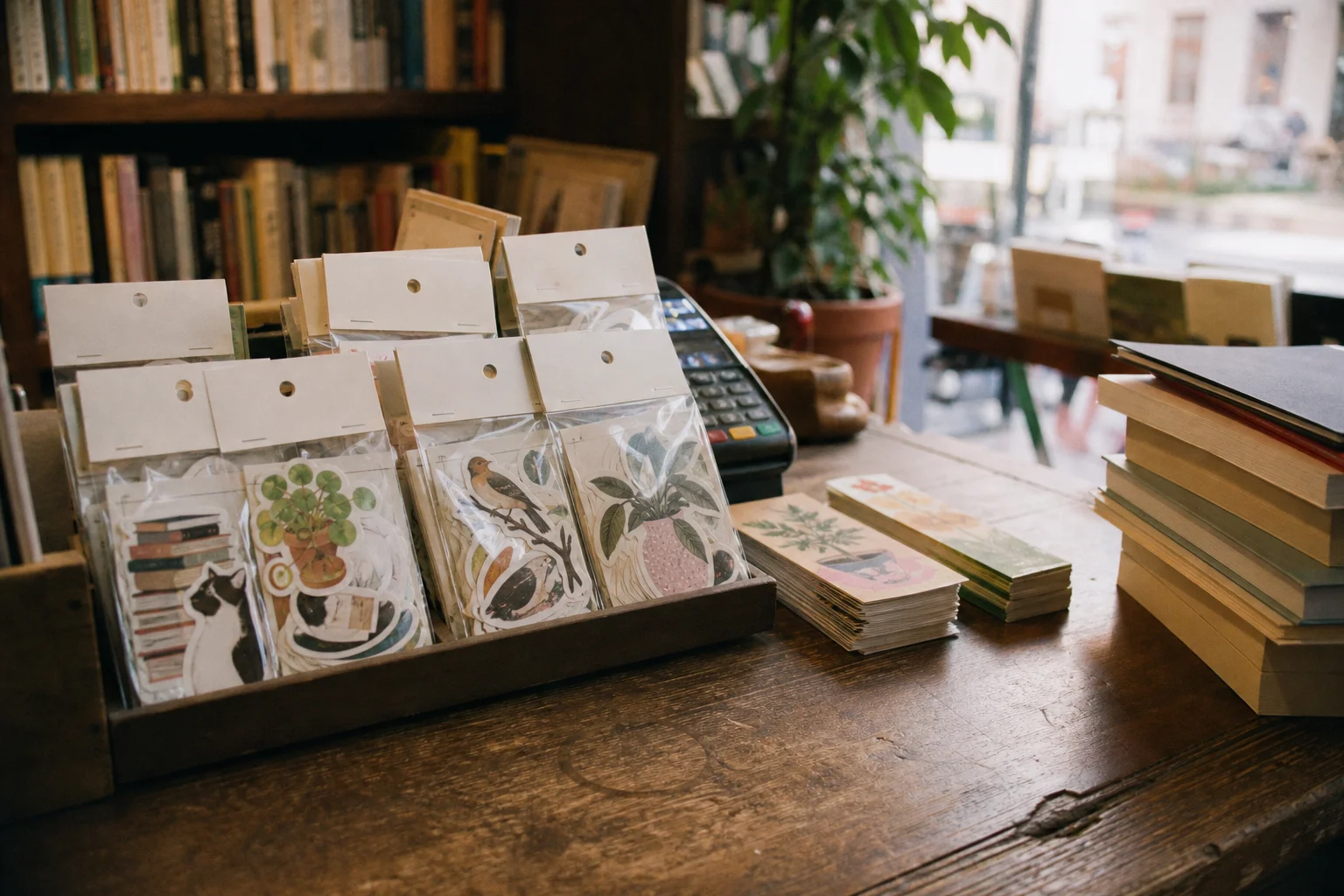
| Bookstore | Readers, journal buyers, parents, students | Nature, animals, literary-adjacent, plants, celestial | $3–5 | Kiss cut sheets, mini packs |
| Gift shop | Tourists, gift-givers, occasion shoppers | Local/regional, humor, seasonal, animals | $4–7 | Die cut packs, themed sets |
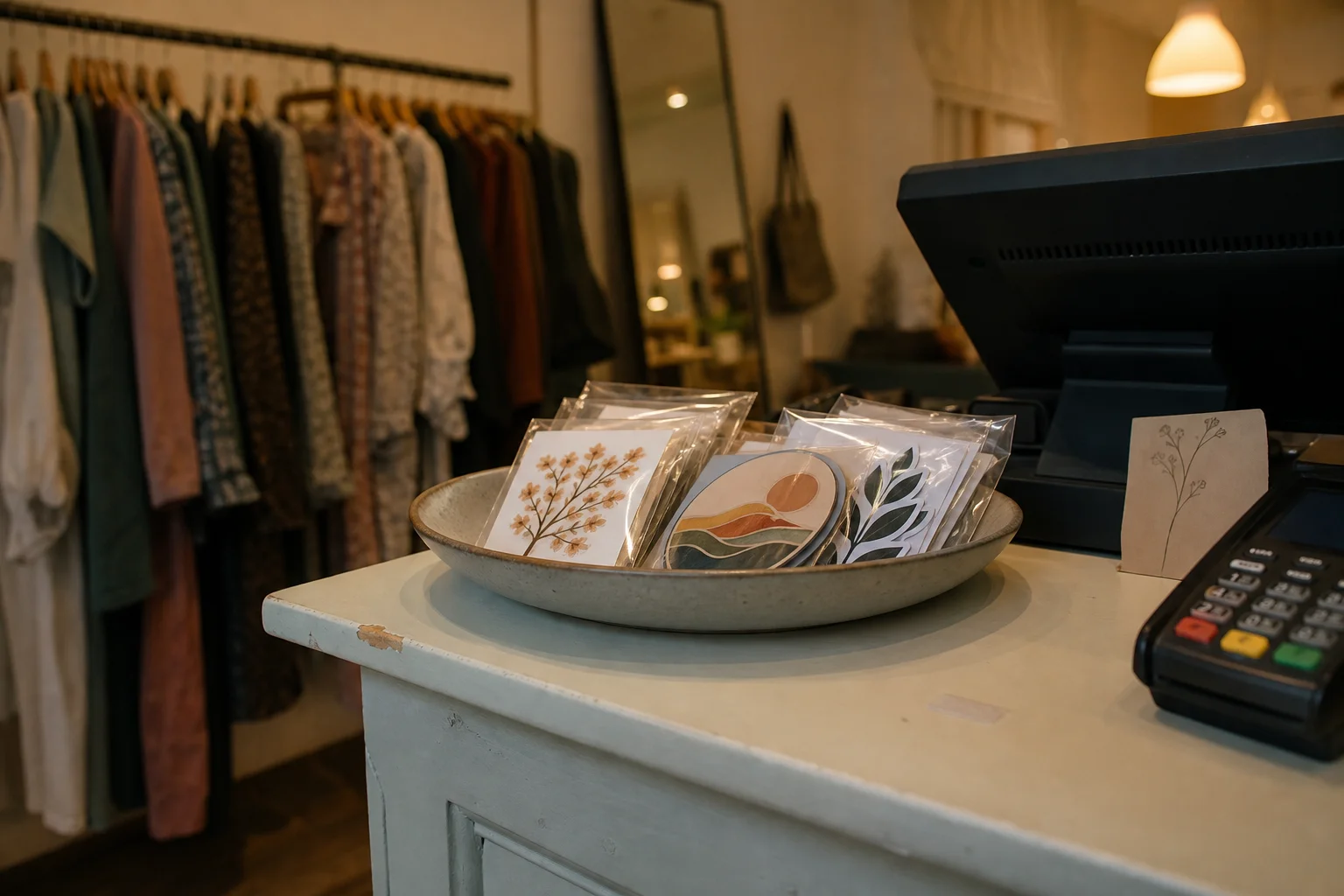
| Boutique | Fashion shoppers, teens, young adults | Aesthetic, minimal, trend-driven, holographic | $5–9 | Die cut, premium/holographic |
| Stationery store | Planner and journal users, students, kids | Functional, decorative, seasonal, kawaii | $3–5 | Kiss cut sheets, sticker sheets |
Notice the pattern: price tier rises with dwell time and gift intent, while theme shifts from functional to expressive. That's the whole logic of channel segmentation in one line.
Not sure which themes fit your store type? Tell us what kind of shop you run and who walks in — we'll suggest a starting theme line and pack spec for your channel. Get a channel-fit recommendation →
Bookstore shoppers browse slowly and buy in an unhurried state of mind. That's a real advantage — but it also means they're looking for something that fits the shop's world.
Avoid heavy trend-driven designs and high-saturation cartoon styles. Bookstore shoppers skew toward considered purchases; loud packaging reads as out of place. Keep the header cards restrained and the palette muted.
Two locations outperform everything else: directly beside the register, and the journal/stationery section. If you have a children's section, a third small display there captures the parent purchase — a separate and highly predictable buyer.
Bookstore shoppers compare sticker packs against books and journals, not against other stickers. A $4.99 pack reads as inexpensive in that context, which makes the $4–5 tier comfortable while a $9 pack often won't clear.
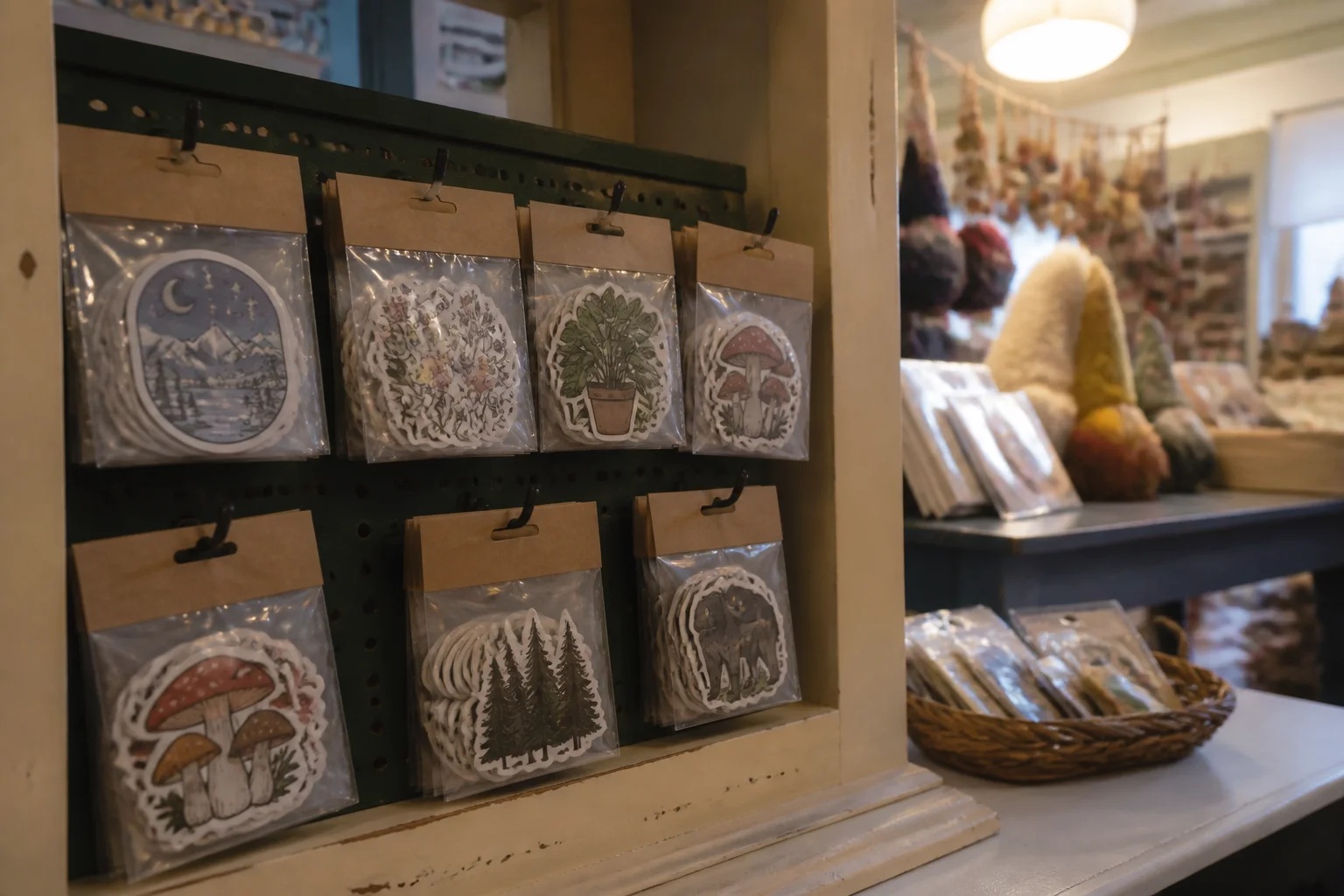
The defining feature of a gift shop is that the buyer often isn't the user. That single fact changes everything about what to stock.
Gift shops can price higher than bookstores because the purchase is already a gift. A sticker pack bundled with a card, a small notebook, or a themed pouch moves from a $5 impulse item to a $12–15 gift set — and the bundle protects per-unit margin far better than discounting a standalone pack.
Near the register and beside the greeting cards. Gift shop customers almost always pass the card section, which makes it the highest-intent real estate in the store. Seasonal displays belong at the entrance during their window, and should be pulled the moment the season turns.
Stocking local or seasonal themes? We'll produce your region-specific designs on the same pack spec as your core line, so one display carries everything. Quote a themed line →
Boutiques are the one channel where a $9 sticker pack is a normal purchase. The customer is already buying on aesthetic judgement, and she applies the same standard to everything on the counter.
In boutiques, packaging restraint beats packaging information. Where a bookstore pack needs the count and a design preview on the card, a boutique pack can carry a minimal card with just the theme name — because the customer is buying the look, not evaluating the contents. This is the one channel where sparse header cards outperform detailed ones.
At the register, in a shallow dish or small tray rather than a tiered stand. Boutique counters are curated spaces; a bulky display undercuts the shop's aesthetic. Keep it small, keep it premium, and rotate themes on a short cycle so returning customers always see something new.
If you stock multiple store types, these themes carry their weight everywhere:
What doesn't transfer: region-specific designs (gift shops only), trend-driven designs (boutiques only), and highly functional planner stickers (stationery only).
If you supply more than one store type — or run a shop that serves more than one shopper — structure your order like this:
Ordering and margin planning: Pricing sticker packs for retail → and the wholesale buyer's guide →
Nature and botanical designs, celestial and abstract patterns, animals (especially cats), and reading-adjacent themes like books and coffee cups. Bookstore shoppers prefer restrained design and muted palettes over high-saturation cartoon styles.
Local and regional themes, humor and novelty designs, seasonal and occasion packs, and animal themes. Gift shop customers are often buying for someone else, so designs that produce a reaction or carry local identity outperform generic designs.
Yes — boutiques are the channel where $8–9 packs sell normally. Premium finishes such as holographic and foil command higher prices here, and customers buy on aesthetic judgement rather than sticker count.
Countertop, and a small one. A shallow dish or low tray at the register fits a boutique's curated aesthetic, whereas tiered stands and pegboard strips can make the counter look cluttered. Keep the display minimal and rotate themes frequently.
Animals, botanical and floral, celestial, seasonal, and everyday-object themes. These transfer across bookstores, gift shops, boutiques, and stationery stores with only palette or finish adjustments. Region-specific and trend-driven themes do not transfer.
Price by finish and channel rather than by design. A standard matte pack suits a $4.99 bookstore price point, while the same design in a holographic or foil finish can retail at $7.99 in a boutique. The design stays consistent; the tier changes with the finish.
Enough to keep the display full between restocks — typically 30–60 packs across 3–5 themes for a countertop display. Gift shops should add a seasonal theme during each window, and boutiques should rotate one theme per month to keep returning customers engaged. Sell-through playbook →
Channel segmentation isn't about producing different products — it's about matching the same production capability to four different shoppers. Build a shared core, layer channel themes on top, and let finish and price tier follow the store rather than the design.
Jokeystickers has manufactured custom stickers for 24 years for retail, gift, and boutique accounts across the US and Europe — die cut, kiss cut, and holographic packs delivered retail-ready with printed header cards and barcode labels, backed by international certifications (ISO, FSC, UL, and more). Free physical samples before production.
Free samples · White-label ready · Barcode printing · DDP shipping
Tell us your channel and customer — we'll quote a themed line built for it.
Request a Channel Quote →Explore related products:


