
Sticker packs have quietly become one of the most reliable impulse categories in physical retail. They're small, colorful, affordable, and they sell to nearly every demographic — kids with allowance money, teens decorating laptops and water bottles, adults buying for bullet journals, planners, and gifts.
The numbers work in your favor too: sticker packs carry high margins, take almost no shelf space, and never expire. A countertop spinner the size of a coffee mug can quietly generate meaningful weekly revenue. This guide walks through exactly how to sell sticker packs in your store — what to stock, where to place it, how to price it, and how to keep it selling month after month.
New to sourcing packs? Start with the wholesale buyer's guide first.
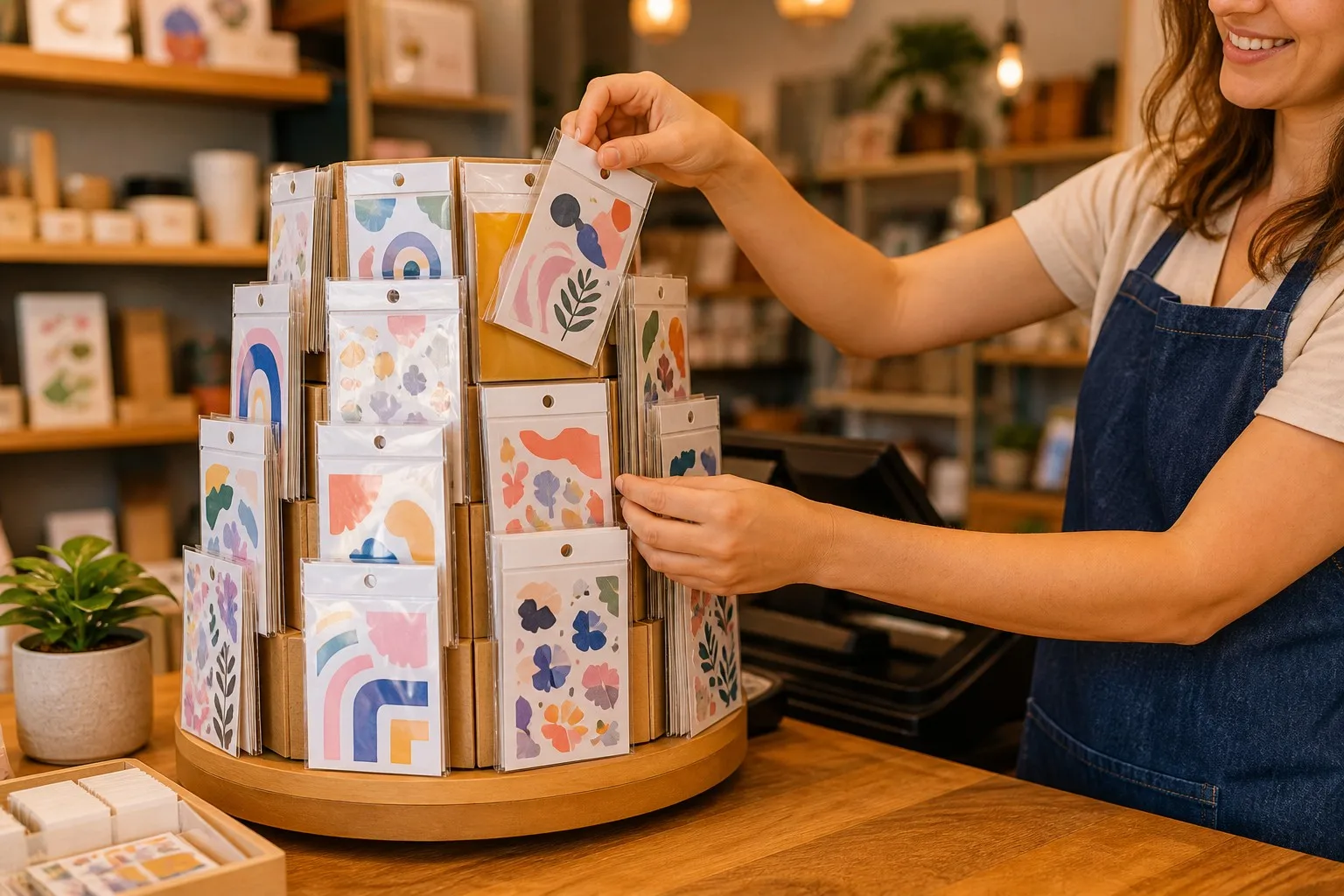
If you're new to stickers, don't try to cover every format at once. Start with a focused mix that spreads risk and tests demand:
For each line, choose 2–4 themes you know your customer base will like — animals and nature, food and drink, plants, cute characters, retro, or motivational words. Test four themes; keep the two that sell, replace the rest.
Not sure which pack lines fit your customers? Tell us your store type and customer profile — we'll recommend formats, themes, and quantities to test first. Get a stocking plan →
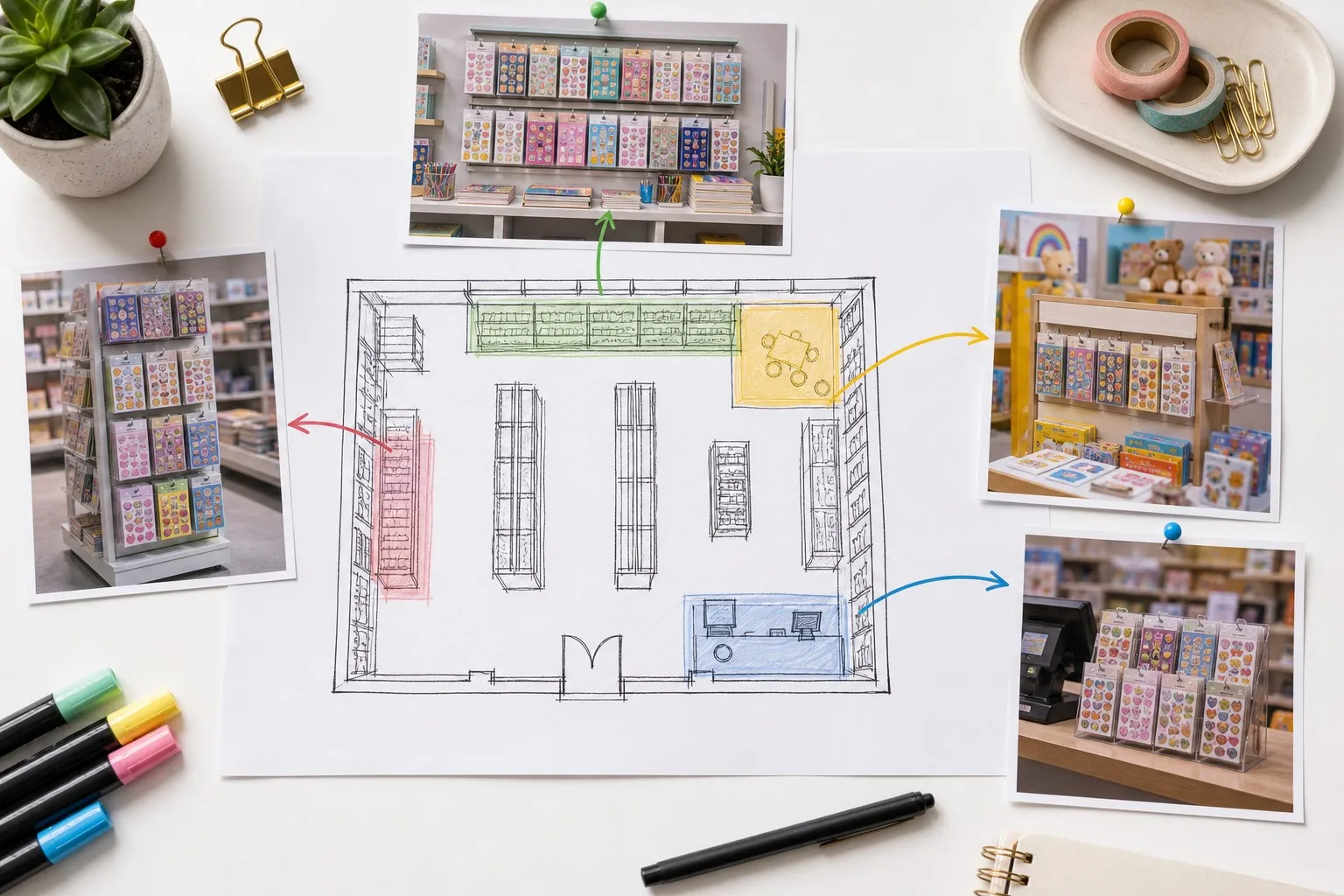
Placement is the single biggest driver of sticker pack sales. Stickers are impulse items — they sell when they're seen in the path of traffic and at the moment of payment.
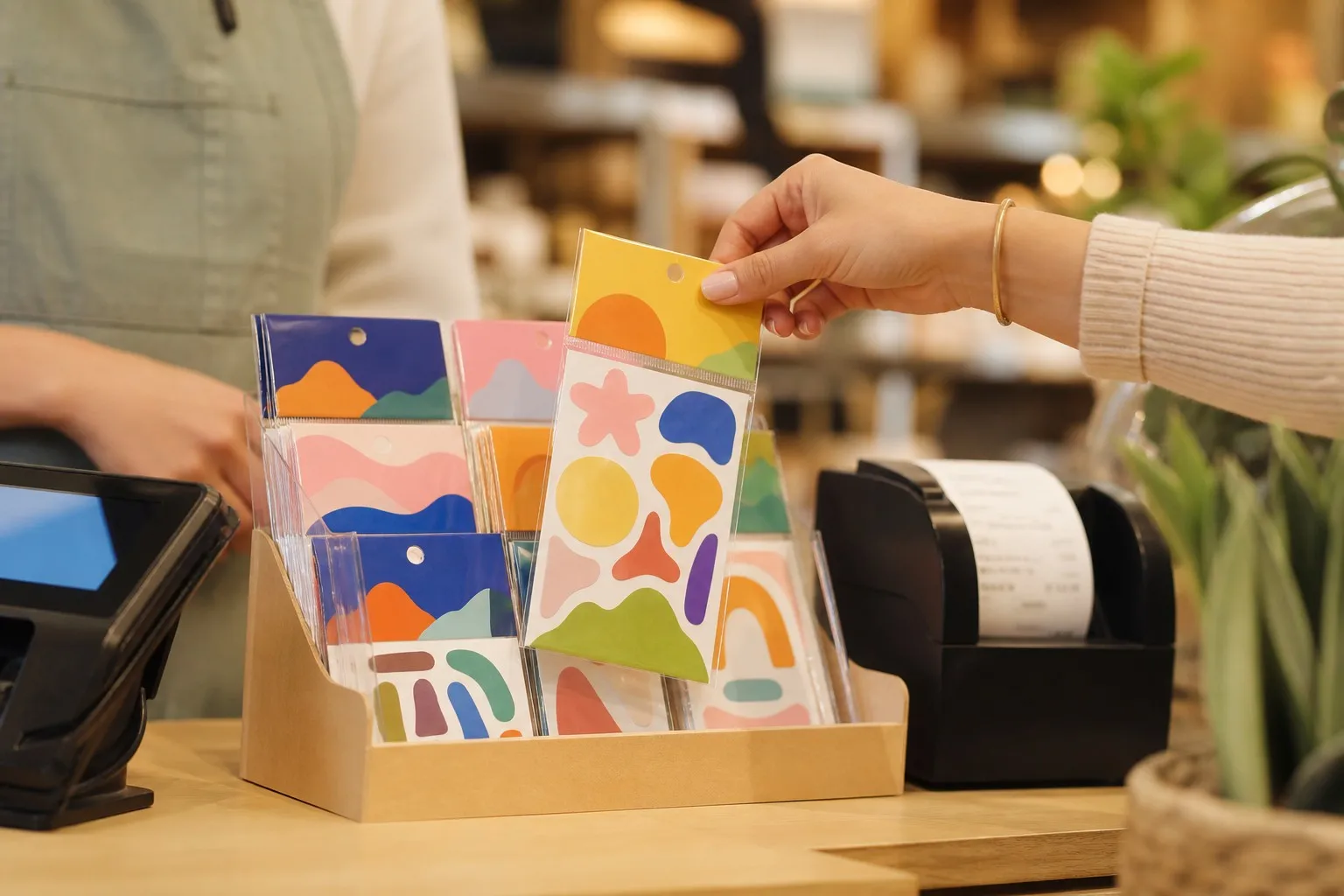
A small countertop spinner or tray of mini packs next to the register catches customers at the exact moment they're already spending. This is where the majority of impulse sticker sales happen.
Hanging hook displays on end caps give packs visibility to customers browsing the aisles. Pair them with journals, cards, or stationery where the tie-in is natural.
In stores with family traffic, a display near toys or children's books turns sticker packs into an easy "yes" for parents — a small treat that costs less than a candy bar.
Sticker packs placed next to planners, notebooks, and washi tape catch the bullet-journal and planner crowd, who buy stickers as supplies, not treats — a different, highly repeatable purchase.
A standard retail pricing rule for sticker packs is 2.5–3x your landed cost — the price you pay per finished pack including freight. Full pricing math: the retail pricing guide →
Quick reference:
| Pack format | Typical retail price | Target landed cost |
|---|---|---|
| Mini die cut pack | $2–4 | Under $1.50 |
| Kiss cut sheet pack | $3–5 | $1.00–2.00 |
| Premium die cut pack | $5–8 | $2.00–3.00 |
| Collectible / theme series | $6–10 | $2.40–4.00 |
Two pricing rules that matter in practice:
More display and packaging ideas: the display guide →
Treat your first 90 days as a test. Track three numbers per design line:
Use the data to build your second order: more of what sold, themes adjacent to what sold, and one or two experiments.
Yes — sticker packs are one of the strongest impulse categories in bookstores, gift shops, stationery stores, and boutiques. They're low-priced, colorful, and bought by a wide demographic, with high margins and no expiration risk.
Start at the checkout counter — the highest-traffic, highest-impulse spot. Then add end caps, kids'/family zones, and the stationery wall. Placement matters more than almost anything else for impulse sales.
Start with 2–4 themes per pack line across one premium, one value, and one mini line. Test, track sell-through, keep what works, and expand from data instead of guesswork.
Mini packs at $2–4 sell the highest volume; premium die cut packs at $5–8 generate the most revenue per unit. Carrying both lets customers self-select by budget.
At the standard 2.5–3x markup, sticker packs typically return a gross margin of 60–70%, which is among the highest in retail — comparable to greeting cards and better than most categories.
Source directly from a manufacturer for the best per-pack cost and white-label options. Factory-direct sourcing lets you control designs, packaging, and barcodes. Request wholesale pricing →
Sticker packs are a low-risk, high-margin category that earns its space in almost any store. Stock a focused mix, place it where customers already spend, price at a clean 2.5–3x, and let 90 days of sell-through data tell you what to reorder.
Jokeystickers has manufactured custom stickers for 24 years — retail-ready packs, white-label branding, barcode printing, and international certifications (ISO, FSC, UL, and more). Free physical samples before production.
Free samples · White-label ready · Barcode printing · DDP shipping
Tell us your store type — we'll help you plan the right first order.
Plan My First Order →Explore related products:


