
Pick up any product on a store shelf — a jar of honey, a bottle of shampoo, a bag of coffee, a candle — and the first thing that tells you what it is, who made it, and why you should trust it is the label. Custom labels are the quiet workhorses of branding: they carry your product's name, story, ingredients, and compliance info, and they sit on the front line of every purchase decision.
This guide covers everything you need to know about custom labels — the types, the materials, how they're made, and how to choose the right label for your product. Whether you're launching your first product or upgrading packaging you've had for years, this is the reference you'll want open when you talk to your label supplier.
Jokeystickers fact: We've manufactured custom labels for 24 years — from bottle labels to food and cosmetic labels — with eight international certifications (ISO, FSC, UL, REACH, and more) that matter for products sold in regulated markets.
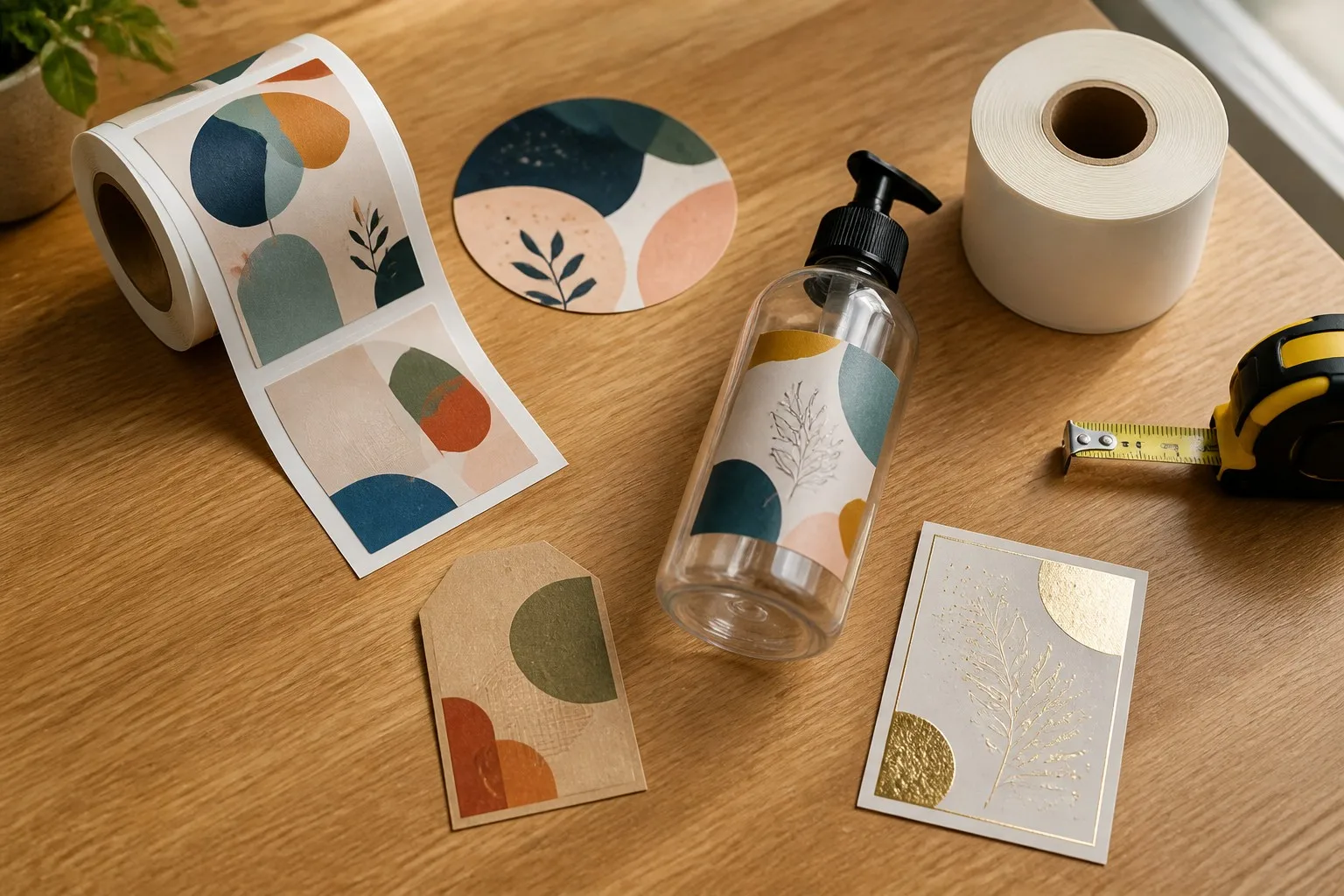
People use "sticker" and "label" interchangeably — but they're different products built for different jobs.
| Stickers | Labels | |
|---|---|---|
| Primary purpose | Decoration, promotion, self-expression | Product identification, information, compliance |
| Adhesive | Varied, often removable or repositionable | Permanent, food-safe, chemical-matched |
| Typical materials | Vinyl, paper, holographic film | Paper, BOPP, polyester, specialty films |
| Format | Die cut shapes, sheets, kiss cut | Rolls (for machine application), sheets, die cut |
| Used on | Laptops, bottles, cars, merch | Products, packaging, retail goods |
If you're labeling a product that ships to stores, you need labels — often on rolls for automatic application. If you're branding merch, sealing packages, or making decals, stickers are the play. Deep dive: stickers vs labels →
Labels are organized by where they go and what they do. Here are the types that cover most products.
From water bottles to craft beverages, bottle labels face moisture, condensation, and handling. Clear BOPP is the standard — it disappears on glass for a premium "no label" look. Bottle labels →
Food labels face oil, moisture, and fridge temperatures, and must meet food-safety and ingredient-disclosure requirements. Oil-resistant BOPP and food-safe adhesives are essential. Jar labels →
Cosmetic labels sit in humid bathrooms and must survive lotion, water, and fingerprints. Matte laminated paper or BOPP with a premium finish is the standard for this category. Cosmetic labels →
Candle labels wrap around tins and jars, facing heat and wax. A vinyl or BOPP wrap label with strong adhesive handles the job. Candle labels →
Round seal labels add trust and tamper-evidence to jars, bottles, and pouches — a small sticker that says "this product is genuine and untouched." Seal labels →
Roll labels are printed on continuous backing for automatic application machines — the format factories and high-volume packers use. Labels on roll →
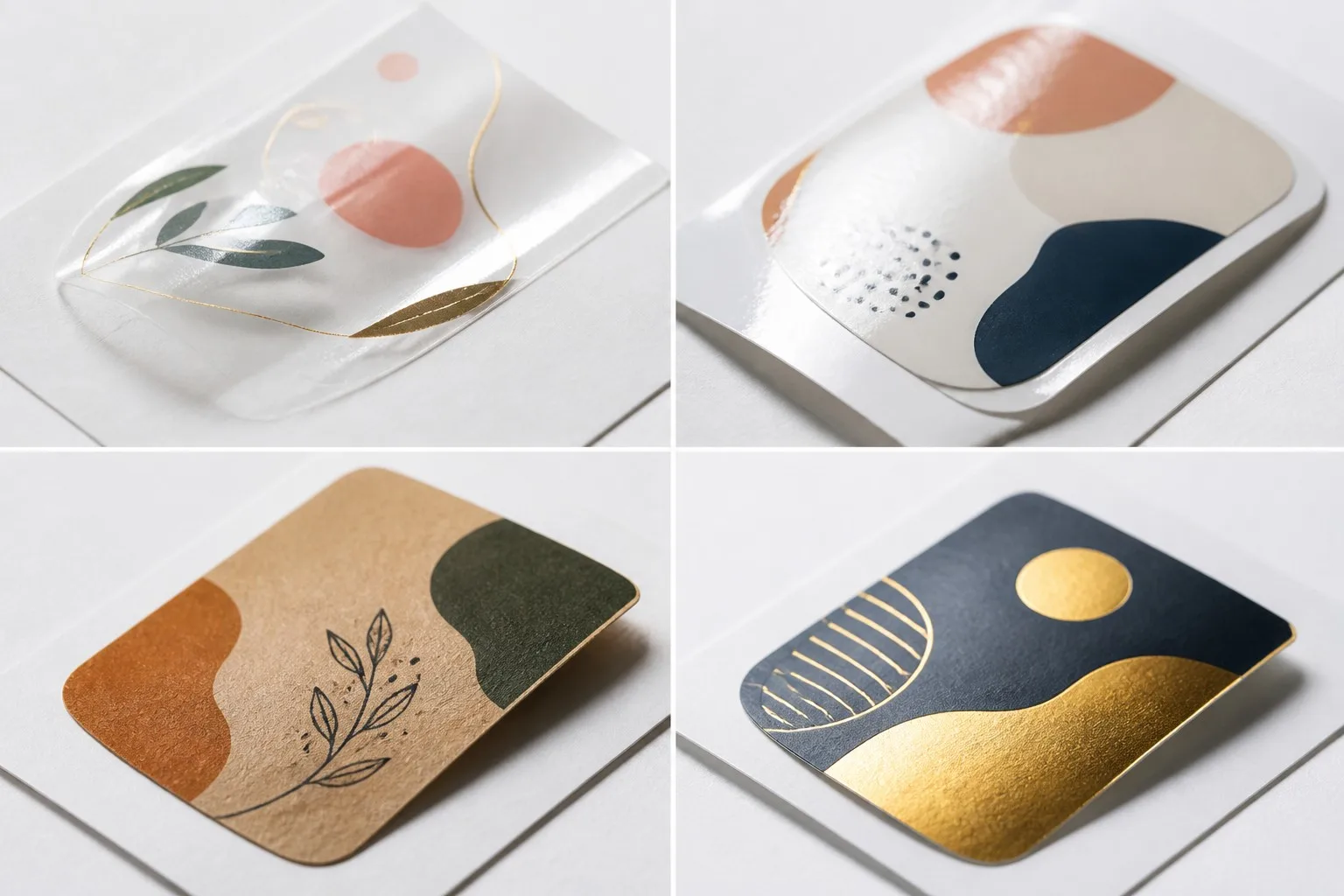
Not sure which label type fits your product? Tell us what you're labeling — food, cosmetics, beverage, candles — and we'll recommend the right type, material, and adhesive. Get a label recommendation →
Material is the biggest decision in labeling — it drives both look and performance. Here's the honest breakdown.
Related: Best Sticker Material for Packaging | What Makes a Label Waterproof?
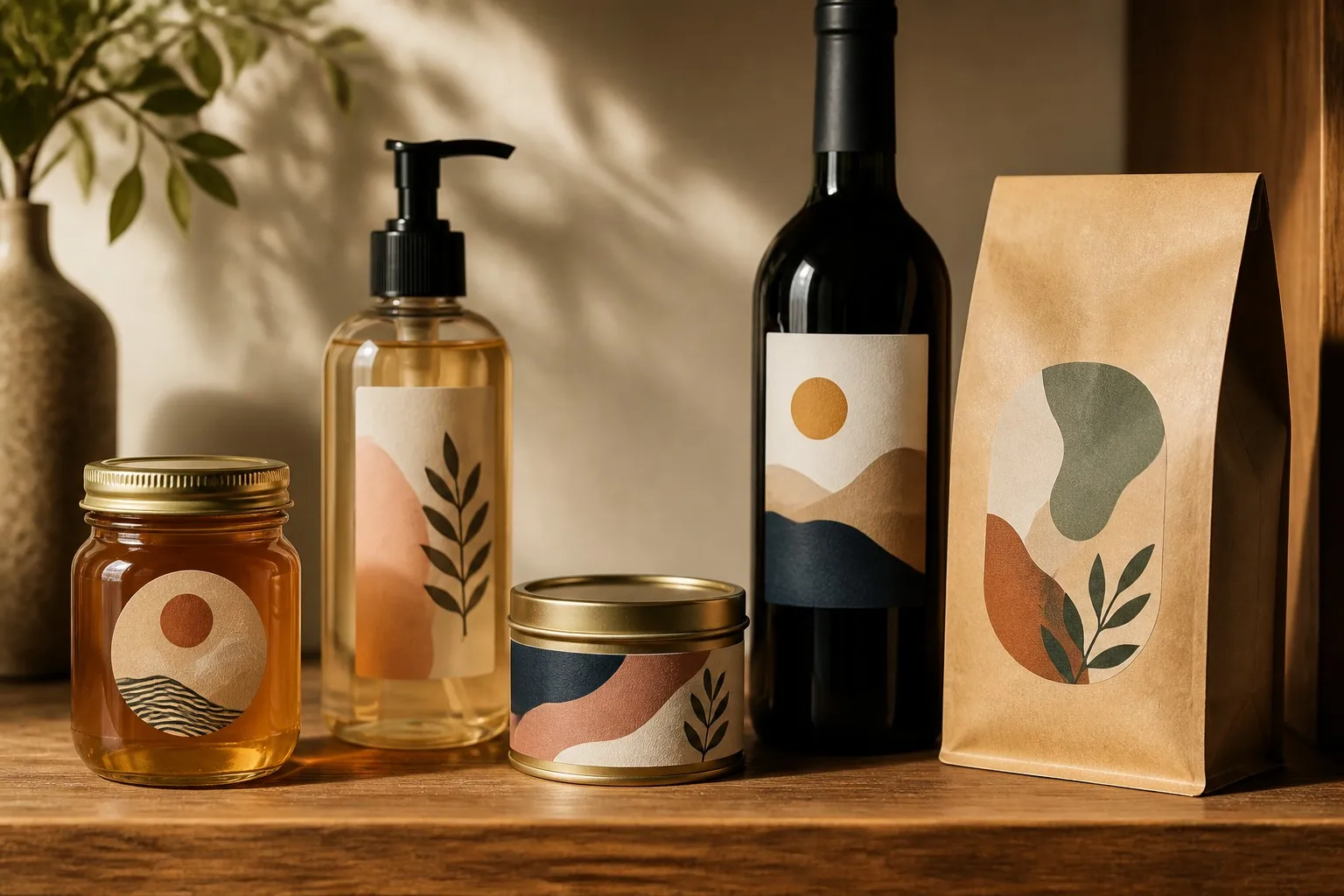
Understanding the process helps you ask the right questions and avoid surprises.
A simple decision framework that covers 90% of products:
Ready to label your product? Get factory-direct pricing and free samples on your chosen material before you commit. Request your quote →
Stickers are for decoration, promotion, and self-expression. Labels are for product identification, information, and compliance — with adhesives, materials, and formats (like rolls) built for products and machines. Full comparison →
Oil-resistant BOPP with food-safe adhesive is the standard — it survives oils, moisture, and fridge temperatures. Paper labels work only for dry, short-life products. Jar and food labels →
Clear BOPP labels are waterproof — that's why they're the standard for beverage and cosmetic bottles. Clear vinyl also works. Both disappear on glass for a premium look.
Roll labels come on continuous backing for automatic application machines — best for high volume and consistent placement. Sheet labels are applied by hand — good for small runs and short-term use.
Paper labels start around $0.02–$0.06 each in volume; BOPP runs higher; specialty finishes more. Rolls cost more to set up but drop fast per unit at volume. Full label pricing guide →
Yes — vector files (AI, PDF, EPS) at 300 DPI with bleed are ideal. If your artwork isn't print-ready, most manufacturers (including us) include basic file adjustment with the order.
It depends on the market and category: product name, net weight/volume, ingredients (food/cosmetics), manufacturer info, and compliance marks are common requirements. Work with a manufacturer who knows the regulations for your market.
Yes. We print free physical samples on your chosen material so you can check color, adhesive, and finish before committing to volume. Request free samples →
Minimums vary by type — rolls and specialty finishes usually need higher minimums. As a factory-direct manufacturer, we offer flexible minimums. Tell us your quantity →
Custom labels are the difference between a product that looks homemade and one that looks shelf-ready. Choose the right type, material, and format — and your product starts selling before anyone reads a word.
Jokeystickers has manufactured custom labels for 24 years. We're a factory, not a middleman: factory-direct pricing, free samples before production, eight international certifications (ISO, FSC, UL, REACH, and more), and direct communication with the team that prints your labels.
Free samples · Factory-direct pricing · 24-hour turnaround
Tell us your product and quantity — we'll recommend the right label.
Request Your Free Quote →Label options:


